
The Ebola epidemic spreading across eastern Democratic Republic of Congo is the deadliest the country has ever seen. More than 5,600 people have been infected and more than 2,700 have died—a case fatality rate of 47%. Six provinces are now affected. And the epidemic is still spreading.

Doctors of the World teams are on the ground. We spoke with David Montano Inturias, our General Coordinator in South Kivu, DRC, about what he is seeing and what it will take to stop it.
What is the current situation of the epidemic in eastern DRC?
Very worrying. We are seeing a very rapid spread of the epidemic. Most recently, we were seeing around a hundred new infections per day, or one new case approximately every 15 minutes. It is already the deadliest epidemic ever recorded in the DRC.
Just compare: the last major Ebola epidemic in the country, which took place between 2018 and 2020, caused 2,300 deaths in the space of two years. The current epidemic has claimed more victims in barely three months.
Beyond the increase in cases, there is also a geographical expansion of the epidemic, making it all the more difficult to control. Currently, in addition to the province of Ituri, where the epicenter of the epidemic is located, five other provinces are affected: South Kivu, North Kivu, Tshopo, Haut-Uélé, and Bas-Uélé.
What are the biggest challenges facing health actors and humanitarian organizations?
First, it is important to remember that there is currently no proven treatment or vaccine against the Bundibugyo variant responsible for this 17th Ebola outbreak in the DRC. This drastically limits the resources available to contain the epidemic, hence the crucial importance of community awareness activities and strengthening triage and infection prevention measures in healthcare facilities.
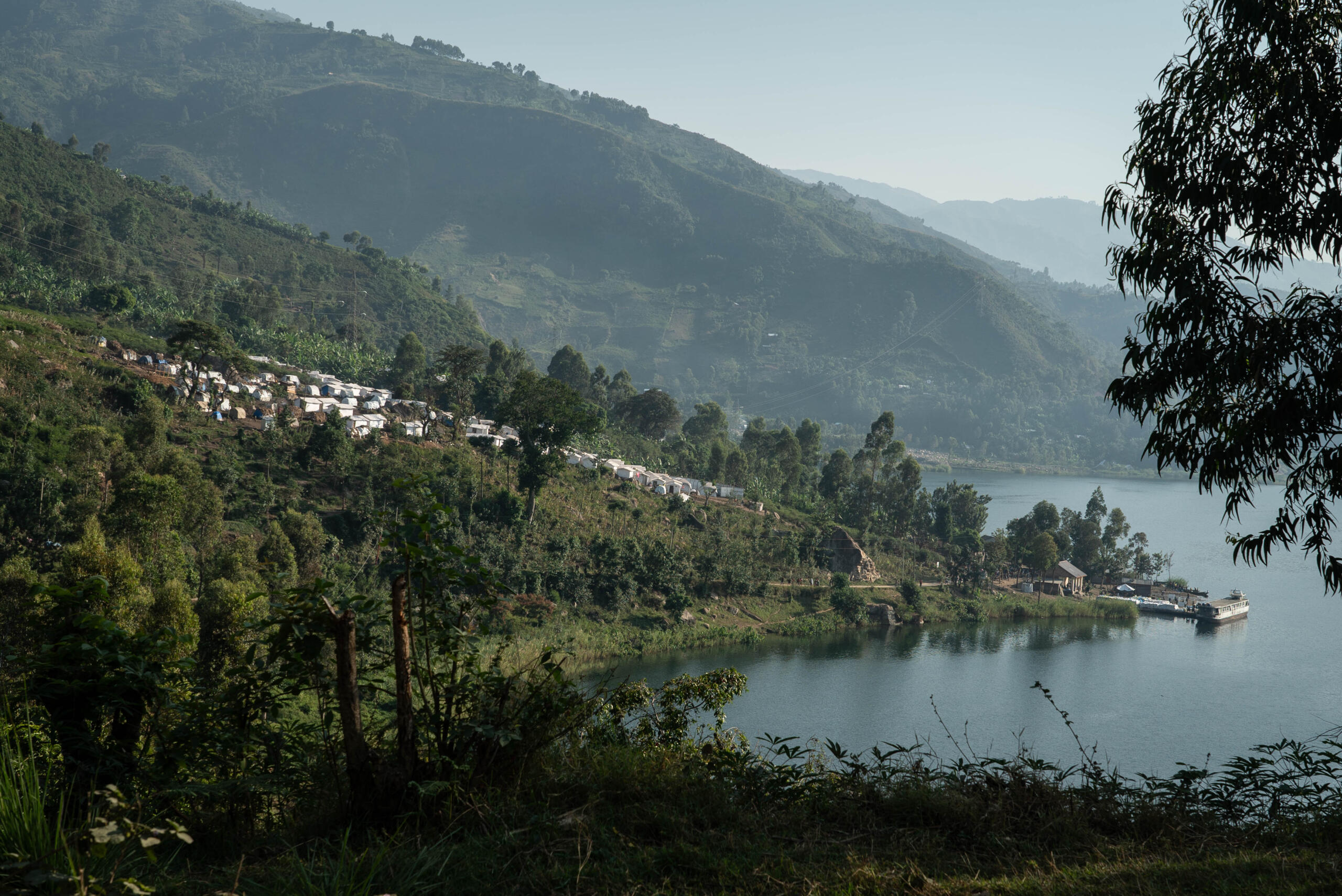
Nor should we underestimate the impact of the security and humanitarian context surrounding this epidemic, which also presents significant challenges. The war did not end with the Ebola outbreak. Armed clashes regularly occur in areas near or directly affected by the epidemic, restricting access for health and humanitarian actors and causing further population displacement. These movements of people and the overcrowded conditions in which displaced persons are forced to live create conditions conducive to accelerating the transmission of the virus.
Finally, public mistrust of the disease, response teams, and healthcare facilities persists. People are avoiding health centers for fear of infection. As a result, deaths—which could be prevented—from other untreated illnesses, or at least those not treated promptly, are also likely to increase.
In South Kivu, for example, and particularly in the capital Bukavu, a cholera epidemic is raging alongside the Ebola outbreak. If cholera patients do not seek treatment as soon as the first symptoms appear, their condition risks deteriorating severely, or even dying.
What are the priority actions that need to be put in place to successfully control the epidemic?
We need to strengthen the monitoring of contact cases, which currently fluctuates between 80-85%; this suggests that the epidemic continues to spread undetected in certain areas.
Furthermore, despite the efforts of health actors, authorities, and humanitarian organizations, the coverage of supported health facilities in infection prevention and control measures remains too low, especially in areas outside the epicenter of the epidemic.
These measures (triage and adapted patient pathways, training of healthcare staff, protective equipment for healthcare professionals, disinfection protocols, etc.) are essential in the fight against the Ebola epidemic. Currently, the resources deployed are still insufficient given the severity of the threat.
This is particularly the case in South Kivu, where the number of confirmed cases has remained relatively low so far. Consequently, there has been less attention from donors and limited funding to combat the epidemic in this province. However, given the scale of the epidemic and the particularly fragile and volatile context of the DRC, a new outbreak could occur anytime, anywhere.
It is crucial to invest significantly in prevention in all areas surrounding the epicenter to stop the disease and contain the spread of the virus.
Our response in South Kivu:
- More than 580,000 people have been made aware of Ebola prevention measures.
- More than 70 public service announcements broadcast via local radio stations
- 96 healthcare professionals trained in triaging suspected cases and providing psychological first aid
- 24 health facilities equipped with infection protection and prevention equipment
- Support for free healthcare for all patients in 4 health facilities in Miti-Murhesa (health zone where Ebola cases have been reported)
- Construction of 4 isolation rooms in health centers for suspected Ebola cases