
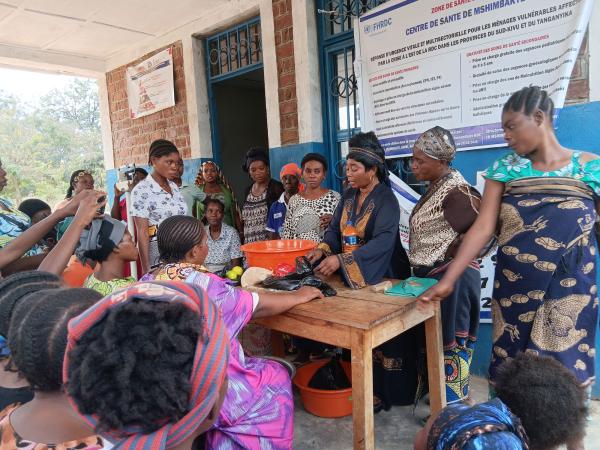
On most days, Fatuma Mulibinge arrives at the community health post in Fizi territory with a bag of ingredients and a portable stove. She is one of what Doctors of the World calls “mamans lumière”—mothers of light—trained to demonstrate, in real time, how to feed a malnourished child using only what families in this part of eastern Democratic Republic of Congo (DRC) can actually find and afford.
She sets out corn flour, soy, local fruits and vegetables, and a small measure of palm oil. Then she cooks.
“We propose nutritious alternatives for children based on locally accessible foods,” she says. “We prepare an enriched porridge—corn flour, soy, milk, fruits, and vegetables to boost immunity. We also add a little sugar and palm oil for energy.”
The women watching her take notes.
The Cost of Coveted Land
Fizi territory sits on the western shore of Lake Tanganyika, facing Burundi, in the province of South Kivu. The land is fertile. The soil is rich in minerals.
And that is part of the problem.
“These resources are coveted, feeding many conflicts along the way, and the population bears the full brunt of the consequences—right down to what ends up on their plates,” says Olivier Murhabazi Bonane, Doctors of the World’s project coordinator in Fizi.
The armed groups fighting over those resources have made farming dangerous, displaced entire communities, and severed the supply routes that connect Fizi to the larger cities of Uvira and Bukavu. Food prices have spiked. Health facilities are running short of supplies. And children are paying the price. Between 10 and 15 percent of children under five in South Kivu now suffer from acute malnutrition—a situation that was already classified as an “alert” at the end of 2025. It has since been reclassified as “serious.”
When Hunger and Disease Collide
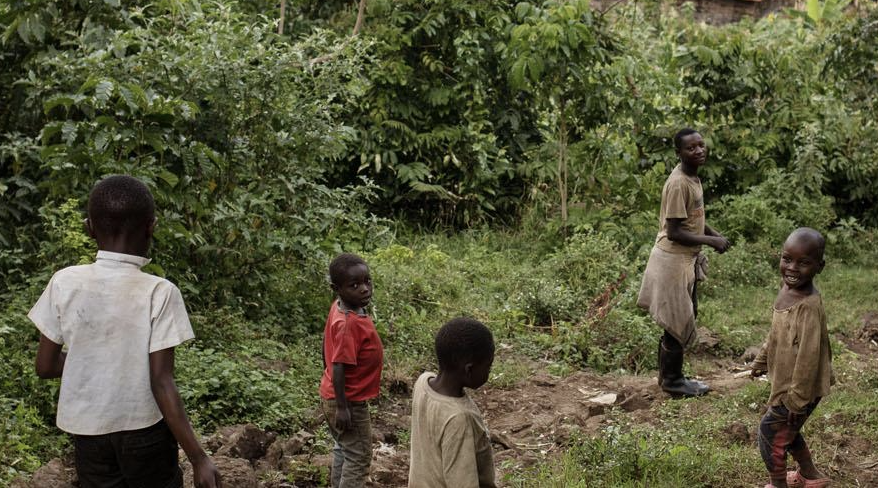
In May 2026 alone, more than 550 children with severe acute malnutrition were treated across 13 health facilities supported by Doctors of the World in Fizi and Nundu. Ten percent of them had to be hospitalized immediately.
The malnutrition Olivier sees is not simply about food. It is about what conflict does to a community over time—the farms abandoned, the roads blocked, the markets that no longer function. “Because it is increasingly difficult for families to find enough nutritious food,” he says, “children don’t have the nutritional intake for their bodies to develop properly and fight off disease.”
And then the diseases come anyway. Cholera. Malaria. Measles. They move through the displacement sites and the remote villages, weakening children who are already compromised, pushing them further into malnutrition. The cycle closes on itself.
Catching Malnutrition Early
Doctors of the World works with a network of 140 community health workers—trained since May 2026—to reach the most isolated communities before conditions deteriorate. They screen children proactively in villages, referring those who need care before the window closes.
The mamans lumière work alongside them. In a single month, the community awareness sessions Fatuma and her colleagues lead reached more than 6,600 people across Fizi territory.
“The population is used to facing major health, geographic, and security challenges,” Olivier says. “But the resilience of communities must not give humanitarian actors an excuse to look away from these areas.”
Beyond Nutrition
Beyond the nutrition response, Doctors of the World supports 17 health facilities across three zones—Fizi, Nundu, and Nyangezi. In May 2026, those facilities recorded more than 15,370 medical consultations, assisted 147 births, and provided care to 92 survivors of sexual violence.
Every consultation and every birth happens in the shadow of conflict. Conflict has shaped life in South Kivu for decades. So has the quiet persistence of people like Fatuma, who show up, day after day, and cook.