
Since it was first detected in May, the Ebola outbreak affecting the eastern Democratic Republic of the Congo (DRC) has led to more than 1,200 confirmed cases and over 300 deaths, while dozens of suspected cases continue to be reported each day. As the epidemic spreads rapidly and health authorities and humanitarian actors mobilize to try to contain it, rumors are spreading and fueling growing resistance among the population.
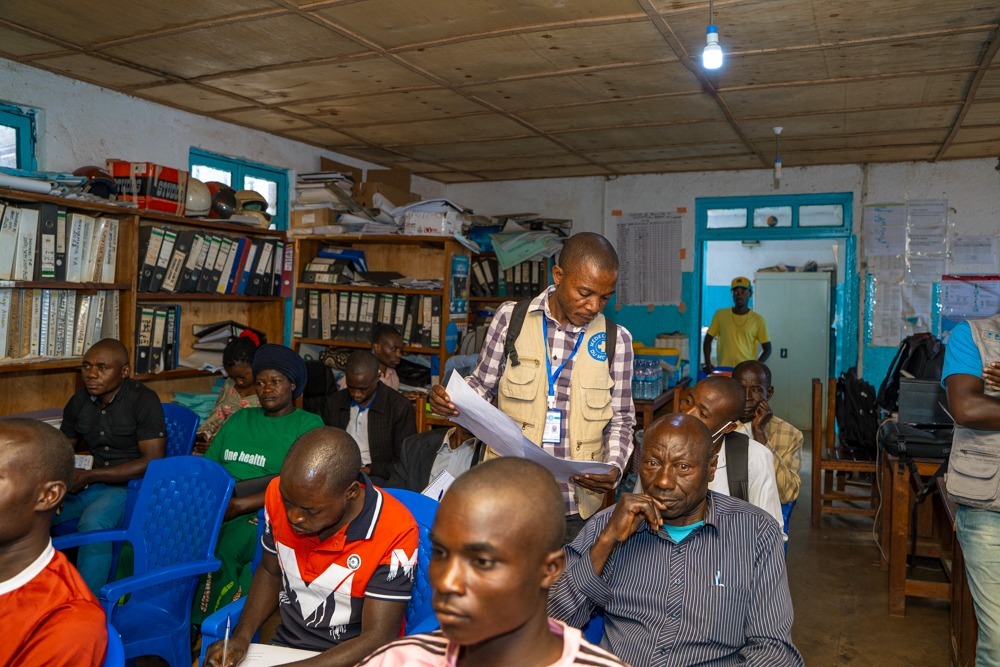
“The urgency of the situation requires acting quickly. But in the rush, essential steps are sometimes skipped. Taking time to engage in dialogue with affected communities and listening to their concerns and perspectives is essential if we want to ensure ownership and acceptance of Ebola control measures by the population,” explains Oscar Bahiva Ayagirwe, the Community Health Focal Point for Doctors of the World in South Kivu.
When communities push back
In recent weeks, a series of violent incidents near Ebola treatment centers in Ituri province has laid bare deep community mistrust toward the response. Burned tents, stone-throwing, and attempts to forcibly remove the bodies of deceased patients have all been reported. “With every Ebola outbreak, rumors circulate; this is far from a new phenomenon. But rumors always feed on the specific context,” notes Ayagirwe.
“The major economic crisis affecting eastern DRC—already plagued by chronic conflict—strongly influences current local perceptions,” he adds. “Some people believe that Ebola is an invention by healthcare workers and humanitarian actors to make money, especially as international NGOs continue to complain about a lack of funding.”
Building the response together
While the epicenter of the outbreak remains, for now, concentrated in Ituri, the number of cases continues to rise in North and South Kivu provinces. Cases have been reported in Uganda, and a case has already been confirmed in France, highlighting the risk of international spread.
On the ground, Doctors of the World teams are working closely with healthcare providers, civil society organizations, and community health workers to strengthen risk communication and community engagement (RCCE).
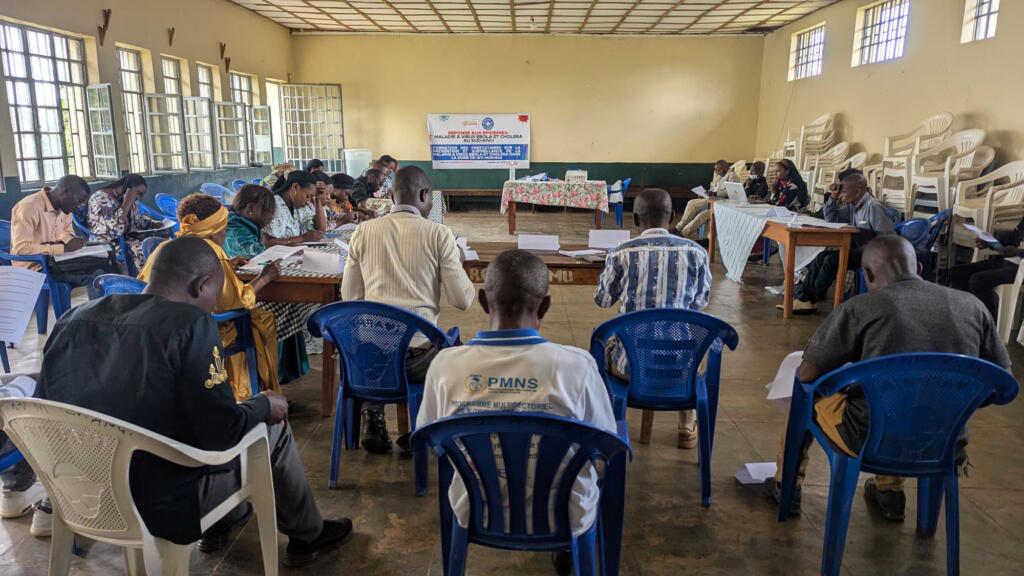
RCCE is a fundamental cross-cutting pillar of the Ebola response, as it allows for the dissemination of accurate, reliable, and real-time information within the population. It is a highly effective way to (re)build trust between communities and response actors, combat misinformation, and promote the rapid detection of patients presenting suspicious symptoms.
“Local communities know their environment better than we do. That is why we must avoid arriving with ready-made messages and solutions, and instead give people the opportunity to co-construct an appropriate intervention,” insists Ayagirwe.
In Ibanda and Katana, for example—two health zones in South Kivu with a high rate of travelers—Doctors of the World teams emphasize vigilance related to population movements, particularly from heavily affected areas. In contrast, in an area such as Miti-Murhesa, which borders Kahuzi-Biega National Park, communication focuses more on the risks associated with the consumption of bushmeat, one of the transmission pathways of the disease.
A community effort
Three hundred community health workers—in collaboration with local health authorities—have already been trained by Doctors of the World in several health zones in and around Bukavu, where the first Ebola cases were reported in South Kivu. With ongoing support from Doctors of the World teams, each trained individual is now responsible for raising awareness among 50 to 70 households within their community.
“The goal is to reach as many people as possible, as quickly as possible. In this way, everyone feels concerned and motivated to take action. Fighting the epidemic is not only the responsibility of ‘experts,'” says Ayagirwe.
“Everyone is responsible for looking after their family, their neighbors, and their community,” he concludes.