
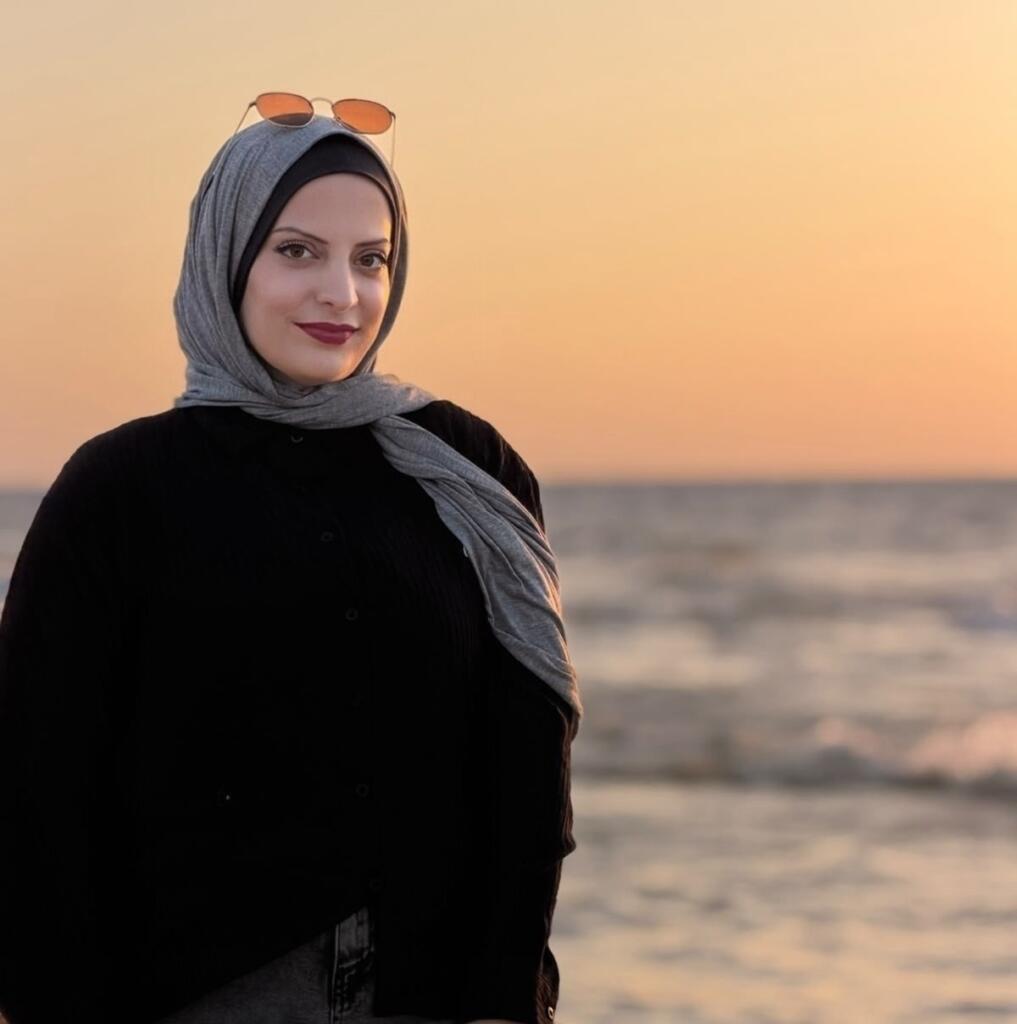
By Nour Z. Jarada, a psychologist with Doctors of the World in Gaza
For nearly three years, the world has spoken about the children of Gaza through statistics: How many have been killed? How many have been injured? How many have been displaced? How many have been orphaned? The numbers are staggering. According to UNICEF, more than 21,000 children have been killed and more than 41,000 injured in Gaza since October 2023. Furthermore, it is estimated that more than one million children need mental health care and psychosocial support. These figures are overwhelming and must be etched in our memory. Yet, beyond the statistics, another story unfolds. A story far more complex to quantify. It doesn’t appear in lists of victims or humanitarian dashboards. This story tells of how war gradually seeps into a child’s daily life and shapes not only their experiences but also the language they use to understand the world.
As a mental health professional, I have always been fascinated by the link between language and development. It is through words that children learn about the world. Language helps them understand their experiences, express their emotions, build relationships, and imagine the future. In normal times, a child’s vocabulary is full of words like “school,” “playground,” “friendship,” “birthdays,” “holidays,” “dreams,” and “discovery.” These words help children grow up with a sense of security, belonging, and possibility. Today, in Gaza, many children are growing up with a very different vocabulary. “Evacuation,” “humanitarian corridors,” “aid distribution,” “famine,” “drones,” “military coordinates,” “safe zones,” “ceasefire,” and that so-called “yellow line”—these are the words that are now part of everyday conversations. These are not terms that children hear by chance on the news. These are words integrated into their daily lives, into their own memories. For many children, talking about evacuation orders, “designated areas” [areas designated as “safe” by the Israeli army for civilians, editor’s note], or times before and after the ceasefire has become just as natural as conversations about school schedules or playground activities.
Over the years I’ve worked with mental health teams supporting children in Gaza, and I’ve often been struck by how children describe the world around them. Some speak of “GPS coordinates” before “geography,” of “escape routes” rather than “car rides,” and of aid distribution instead of everyday school life. Others can identify the sound of drones with remarkable accuracy while struggling to recall a normal school year. Their earliest memories are increasingly filled with movement, uncertainty, repeated displacement, and survival. How can one not wonder what happens when the language of war becomes more familiar than that of childhood?
War takes deep root in the nervous system
The consequences of this transformation go far beyond vocabulary. For healthy development, a child’s brain needs security, stability, and predictability. Children need routines, relationships, opportunities for play, and the confidence that tomorrow will be like today. When these foundations disappear for extended periods, children adapt to a world dominated by uncertainty and threat. Mental health teams deployed across Gaza report symptoms of chronic anxiety, sleep disturbances, hypervigilance, emotional distress, and difficulty concentrating in many children.
What worries me most is that the psychological impact of war doesn’t end with the announcement of a ceasefire. Trauma rarely follows the political agenda. Even when hostilities subside, children still carry the emotional and physiological consequences of years spent anticipating danger. When the news moves on, many children remain trapped between past memories and fears of what might happen next. War takes deep root in the nervous system and remains there long after it has disappeared from view.
As mental health professionals, we know that trauma is not only transmitted through direct exposure to violence. Trauma can spread silently, from one generation to the next, through shared stories, fears, coping strategies, and memories. For decades, Gaza has experienced successive wars, and many parents are raising their children while carrying unresolved trauma themselves. The current generation is thus growing up at the intersection of personal, familial, and collective trauma, resulting in psychological consequences whose effects will only become fully apparent years from now.
Recognizing the urgent need to preserve spaces dedicated to children, Doctors of the World has created emotional well-being spaces within several of its primary healthcare centers. While these spaces cannot change the reality that awaits children outside, they offer them something vital: a temporary return to normalcy. Through psychosocial activities, creative expression games, storytelling, drawing, and discussion groups, children have the opportunity to experience moments similar to those of an ordinary childhood.
Kites, one of the few sources of comfort
What particularly touched our teams was how these ordinary moments became extraordinary. For countless children, these wellness spaces are the only places where they can find age-appropriate toys, hold crayons, draw freely on a sheet of paper, read stories, or simply participate in activities designed for children. In a reality marked by destruction, displacement, and the collapse of daily routines, a simple box of crayons or a blank sheet of paper can be enough to spark enthusiasm and joy.
Watching children carefully choose their colors, proudly present a drawing, or become completely absorbed in play is both wonderful and heartbreaking. Wonderful, because it reveals their remarkable capacity to imagine, despite everything. Heartbreaking, because these simple moments have become so rare that they seem extraordinary. When an assortment of colored pencils becomes a luxury, a storybook a rare treasure, and playing in a safe space the most anticipated moment of the week, we realize the extent of what childhood has already lost.
For generations, children in Gaza have flown kites from rooftops, in open spaces, and along the coastline. A kite has always embodied something simple yet essential: freedom, imagination, curiosity, and joy. During the war, as toys became scarce and recreational spaces disappeared, many children began making kites from scraps of plastic, paper, string, and bits of wood salvaged from the rubble. In displacement camps and temporary shelters, these handmade kites became one of the few remaining sources of comfort and emotional relief.
Yet even this limited space left for childhood became caught up in the realities of war. Following warnings that flying kites could expose children to military targeting, many parents were afraid to let their children engage in one of the few forms of play still available to them. Some children were asked to stop flying their kites altogether. Suddenly, a toy made of paper and string became associated with fear rather than freedom.
War, the backdrop to the earliest memories of many children
I often return to the symbolism of this image: a child standing beneath a sky dominated for years by drones, surveillance planes, and bombings, holding in his hands a kite handcrafted from the remnants of destruction. In most parts of the world, the kite is a symbol of imagination and possibility. In Gaza, even a kite has found itself vulnerable to the logic of war.
There is something profoundly heartbreaking about a childhood confined to such a small space that even play becomes a source of insecurity. As discussions increasingly focus on reconstruction and healing, attention naturally turns to rebuilding homes, schools, hospitals, and infrastructure. Yet perhaps the greatest challenge lies elsewhere: rebuilding childhood itself. After years of displacement, fear, and survival, how can we help children rediscover a sense of security, the joy of play, and the freedom to imagine a future beyond war?
When I think about Gaza’s future, I think about the children who grew up during this war. For many of them, the war is not a historical event that interrupted their childhood; it forms the backdrop of their earliest memories and the language through which they learned to understand the world. The deepest wounds of war are not always found in destroyed buildings or official statistics. Sometimes they manifest in the vocabulary of a child who learned displacement before belonging, survival before play, and fear before hope. If we truly want to understand Gaza’s future, we must listen carefully to its children. Their words reveal not only what they have endured but also the immense responsibility we bear: to ensure that one day they can relearn the language of childhood.
This article was originally published in Liberation on September 25, 2026.