
When Doctors of the World launched its Border Health Program in El Paso, Texas, in October 2022, it brought medical care into the city’s migrant shelters, helping people who had just crossed the border—worn out, often frightened, and still facing an uncertain road ahead. Then, in early 2025, the Trump administration cut off a key legal pathway for migrants to enter at the border and sent Immigration and Customs Enforcement (ICE) into communities across the country. Almost overnight, the flow of people slowed to a trickle.
Today, far fewer new arrivals come through the shelters. Increasingly, the people the program cares for had been living in the United States, sometimes for years, until they were detained, held in immigration detention centers for months, and released with little more than the clothes on their backs.
The crisis in El Paso didn’t disappear. It just changed shape. And so did the work of Doctors of the World.
A different kind of arrival
Carol is a full-time volunteer at Casa Papa Francisco, a shelter run by Annunciation House in El Paso, where Doctors of the World has provided medical care to residents for years. At 82, she says the work is what keeps her sharp. But what that work looks like has shifted in ways she never expected.
“We’re no longer getting people in migration who are seeking asylum,” she says. “We are only getting people who have been rounded up by ICE.”
They arrived in a different way than the people she used to serve. Many were picked up hundreds of miles from the border—in places like Minneapolis, Boston, and Miami—with American citizen children waiting for them at home. And what Carol has noticed is that they arrive as traumatized as the families who once crossed the Darién Gap—the notoriously dangerous jungle between Colombia and Panama—on foot. But the trauma is different.
“Those families had made a choice. They somewhat knew what they were going to get into. They had resources lined up,” she says. “The ones that come out of detention have just been grabbed.”
They also arrive having been denied even basic healthcare inside. “They’re not treated well in detention,” Carol says. “If they tell them they have a stomachache, they say, ‘drink water.’ If they say they have gastric reflux, they say, ‘drink water.’ They don’t get good attention for anything.”
Released and untreated
Dr. Andrew Koltun, a pediatrician who worked with Doctors of the World in El Paso from August 2025 until this past June, spent months working alongside Carol to care for people as they came out of detention. He saw the same problems again and again. People released without the medications that kept their chronic conditions in check—diabetes, tuberculosis, high blood pressure. Medical records that were lost or simply wrong.
“You don’t need to be in healthcare to know that missing your insulin can be quite bad in a matter of hours,” he says.
He and Carol would sometimes have a single night to reorder someone’s medications before they got on a bus the next morning. “You’re really trying to figure out what’s most important tonight,” he says. “What can I not negotiate or fudge on.”
The people Dr. Koltun saw were not all in the same situation. Some were self-deporting—leaving the country after every path forward had closed, facing what he calls an impossible decision that “requires its own kind of healing.” Others were stuck in El Paso, needing surgeries they couldn’t get, well enough to leave the hospital but not well enough for the journey ahead.
What both groups carried went beyond the physical. There was a disillusionment, he says, and a sadness that lingered.
Much of what Dr. Koltun was seeing at the shelter could be traced back to the care people were denied inside detention. What he was treating were the downstream effects of medical neglect—repeated, systemic, and now documented in the public record.
Inside Camp East Montana
U.S. Government Accountability Office / Public domain
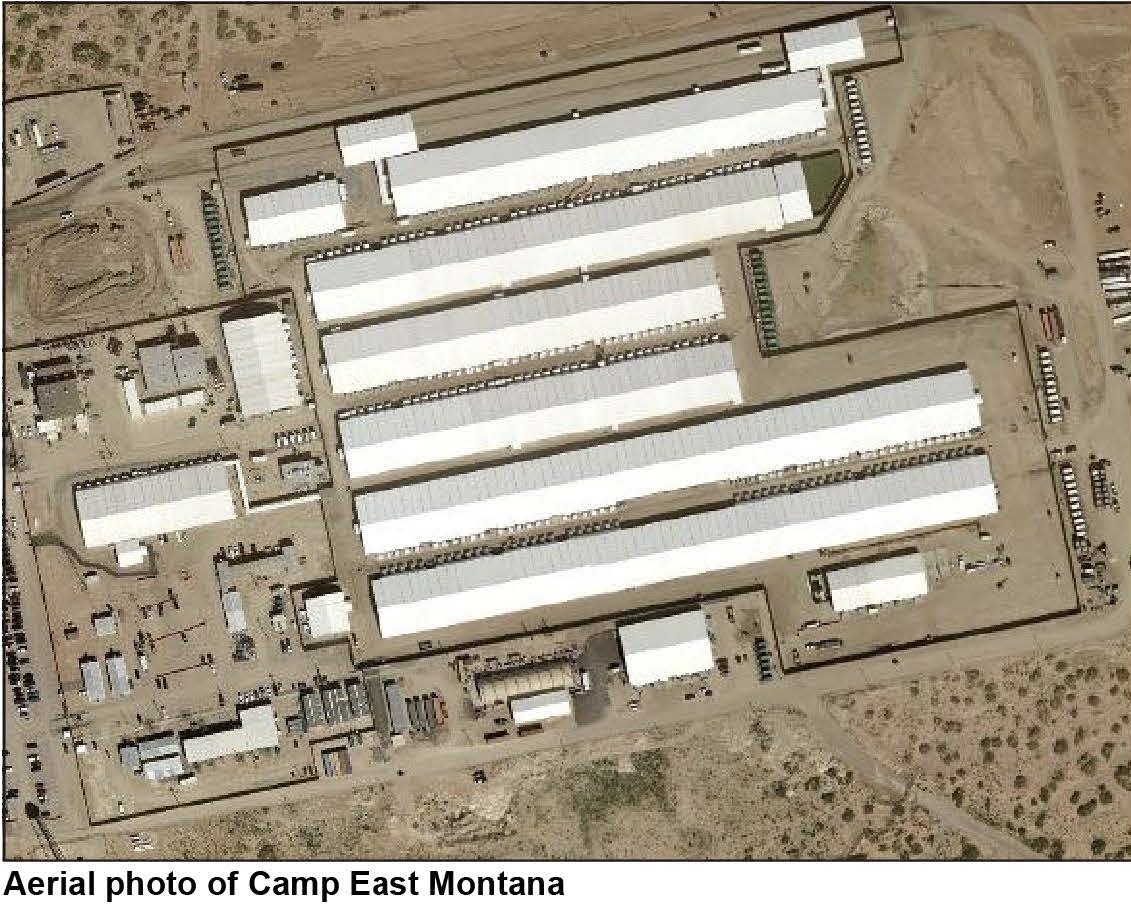
The facility at the center of that record is Camp East Montana—a sprawling tent city on Fort Bliss, a U.S. Army base on the outskirts of El Paso, and now the largest immigration detention center in the United States.
A federal lawsuit filed in May by the ACLU of Texas describes what people have endured there. One man told guards repeatedly that he needed his tuberculosis medication and was told nothing could be done until he was processed. He went nearly 24 hours without it. A woman was told the facility couldn’t provide her weekly insulin shot because it was too costly and went weeks without it. Another man was denied chemotherapy for his cancer while in custody. He died shortly after his release.
Dr. Koltun saw the evidence of these failures in the records that followed people out. Medical care, he says, was often left to a single nurse asked to diagnose well beyond their training. One woman with a possible tuberculosis mass was given the same tests over and over while her care stagnated.
Three people have died at Camp East Montana since it opened in August 2025. One of them was Geraldo Lunas Campos, 55, from Cuba, who was denied his asthma medication, placed in solitary confinement, and physically assaulted by guards. The El Paso County Medical Examiner ruled his death a homicide. The last thing people in the unit heard him say was “Me estás asfixiando.” You’re choking me.
The ones who make it out reach places like Carol’s shelter—not as statistics, but as survivors of a system that failed them long before they got there.
Meeting people where they are
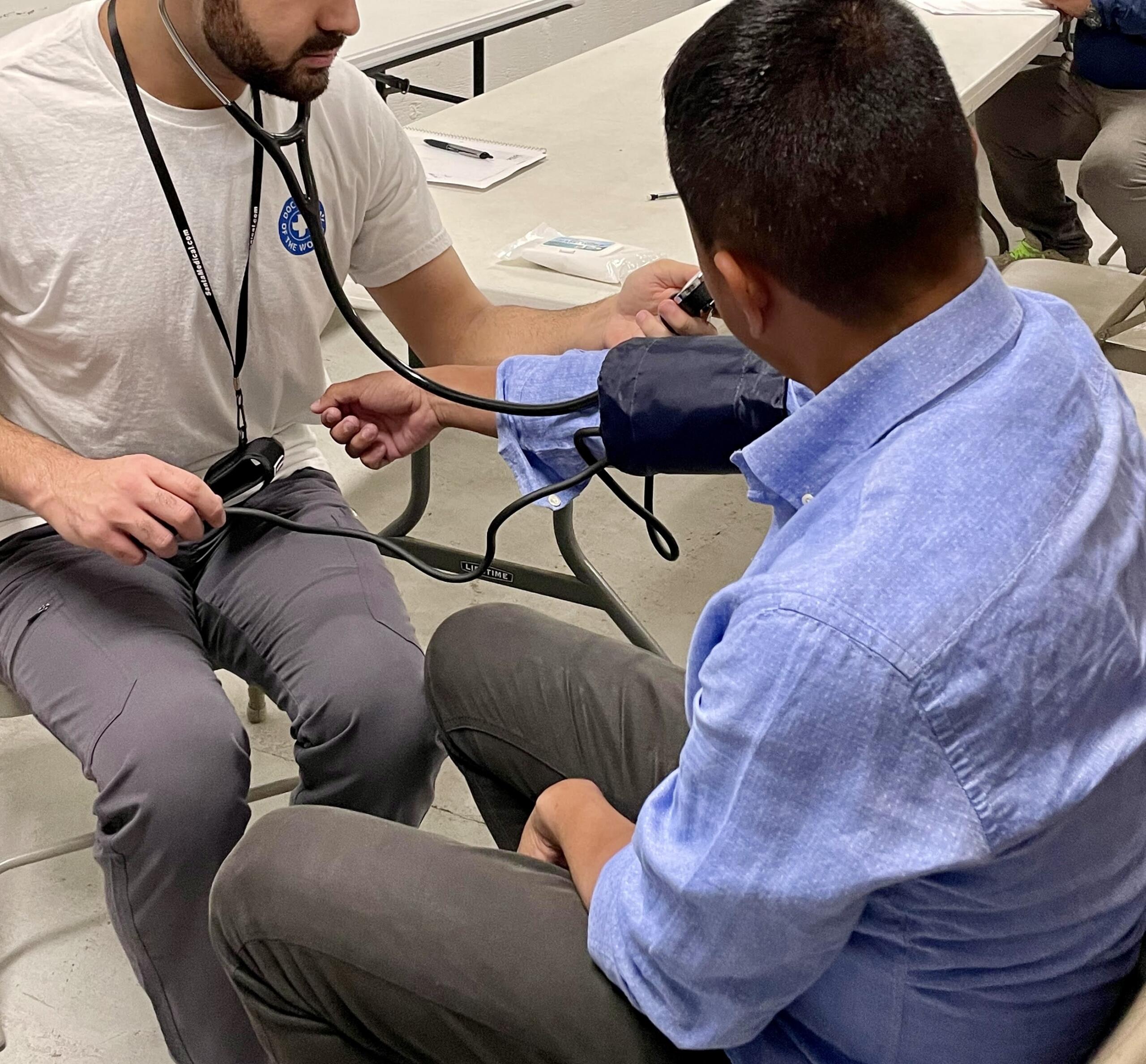
The shelters are only part of the picture. For years, Doctors of the World has run clinic days in community spaces across El Paso, among them a café in the central part of the city that has long served as a gathering place for migrants and, more recently, the unhoused. Back when migrants were still crossing, those clinics served people who had just arrived, many of whom first came for help with employment paperwork and returned when they were sick.
One of them was a single mother of five. When she developed what seemed like ordinary acid reflux, she came to a Doctors of the World clinic day at the café. The doctor who saw her flagged her symptoms for further testing, and the results found something no one had been looking for: she was HIV positive. It was a diagnosis that might never have been caught otherwise.
A social worker connected her to a free lifetime treatment regimen, roughly $50,000 a year in medication. She took it for two months and began to feel better. She was the only earner in the house.
Then someone reported the family to ICE. They were detained and deported to Venezuela, where the café owner—who has stayed in touch with the family—does not know if any HIV treatment is available to her. “I’m worried she’s going to die,” he says.
Her story is a glimpse of how precarious life has become for immigrant families in El Paso, where a single report to ICE can undo everything overnight. That precarity has made many afraid to draw any attention at all, even when it means going without care they urgently need. It is what Doctors of the World is working against, because the cost of staying invisible is often just as high as seeking help.
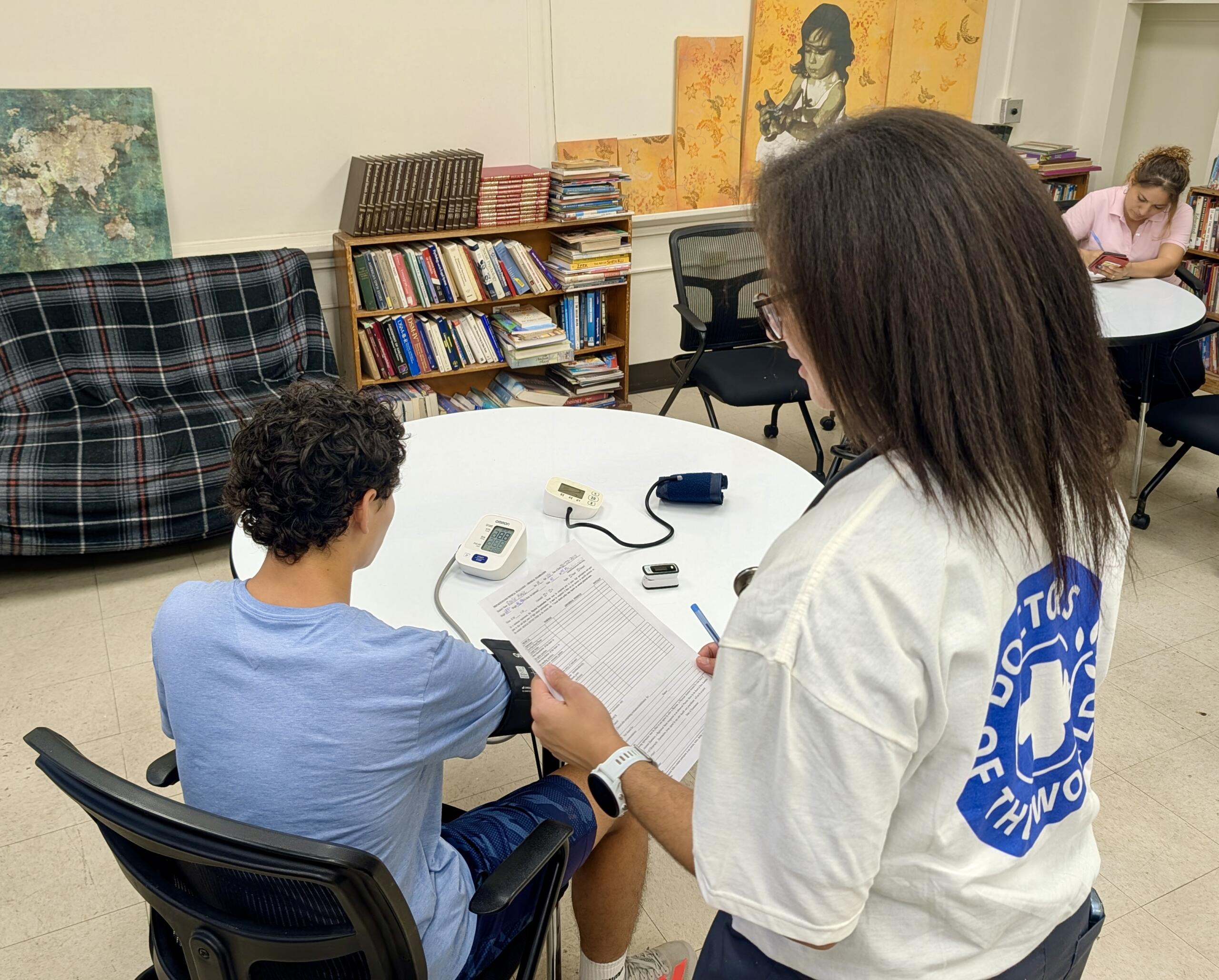
The answer has been to reach further into the community, not pull back. This past July, in partnership with Texas Tech Pediatrics, Doctors of the World provided free sports physicals to 43 children so they could play for a local soccer club serving low-income immigrant families.
For most families, a sports physical is a phone call and a copay. For families weighing every institution against the risk of detention, and often unable to afford care, it is anything but. By offering the physicals in a place they already trusted, Doctors of the World made access possible.
“The physical helped us be prepared to enter school sports,” said one girl who was cleared to play, alongside her younger sister.
Getting a child on a soccer field might sound small. Here, it is not.
From witness to advocate
But community clinic days can only reach so far when fear has seeped into every part of daily life. Megan Palacio, who coordinates Doctors of the World’s Border Health Program in El Paso, says people are avoiding emergency rooms with broken legs because they are afraid ICE will be waiting for them. Providers are frightened too. Legal ambiguity around immigration, reproductive health, and LGBTQ care has led some to stop offering services they are fully permitted to provide.
So Doctors of the World built a virtual training for clinicians called Know Your Rights, walking medical students, ER doctors, and pediatricians through what the law actually says, what rights they and their patients have, and how to write clinic policy before immigration enforcement shows up rather than during a crisis. It began with Texas medical students in 2025 and has since gone national.
Doctors of the World has also been conducting medical evaluations inside detention facilities, documenting what people have endured through eye exams, asylum exams, and mental health assessments carried out with the ACLU of Texas and other legal partners.
Increasingly, the work has moved from documenting to demanding change. This past August, on the one-year mark since Camp East Montana opened, Doctors of the World signed a public joint statement calling for the facility’s permanent closure and an independent investigation into the deaths there.
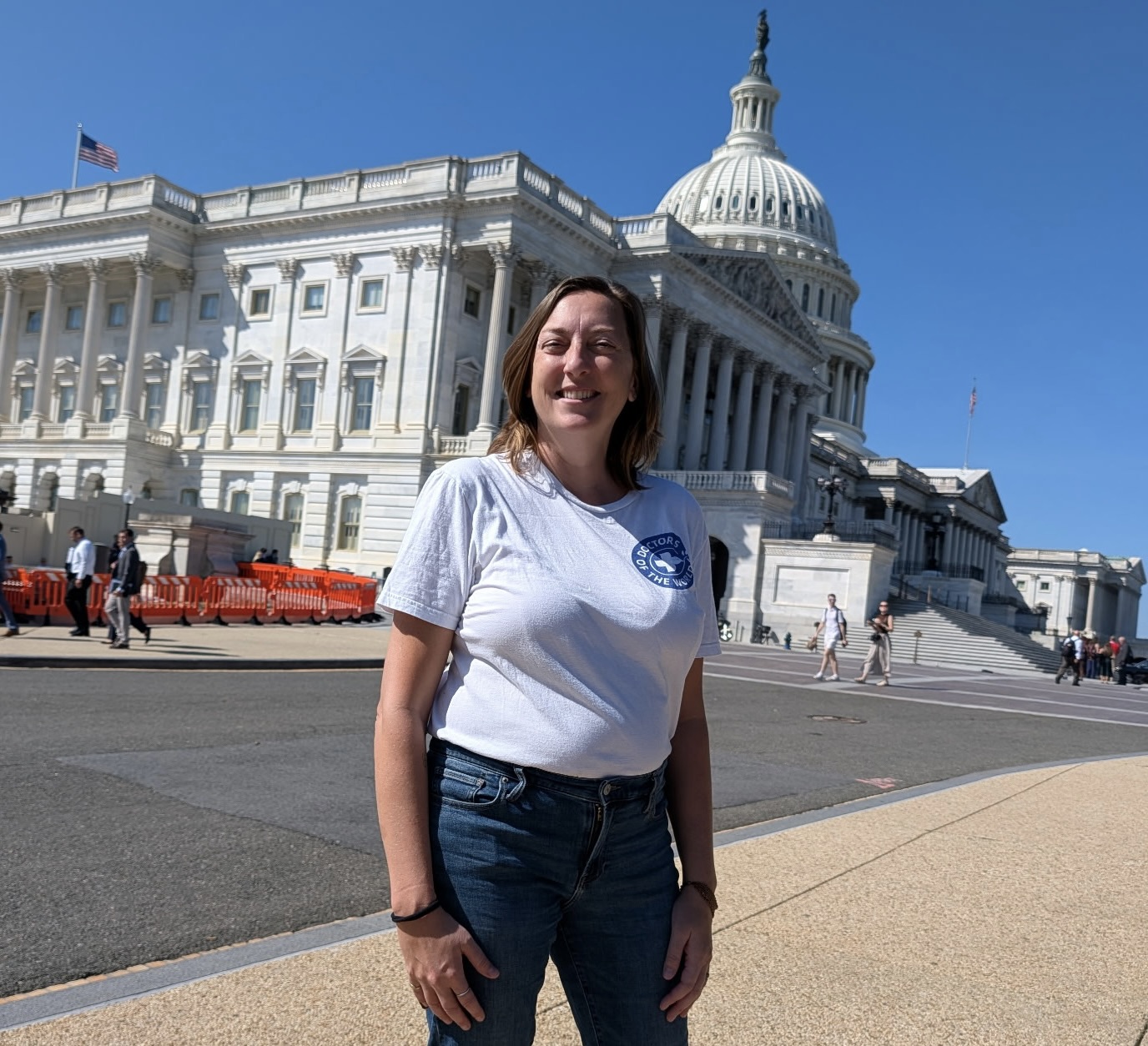
A month later, Megan brought that message to Washington, D.C., as part of a national coalition calling on lawmakers to shut down ICE detention centers, halt the construction of new ones, and address the medical neglect documented inside.
What he carries
Dr. Koltun left El Paso in June, but he did not leave all of it behind. He got inside a detention center once, through a lawyer with enough standing to bring him along. The room was bare, with one-way glass, furniture bolted to the floor, almost nothing to examine a patient with. Asylum medicine asks people to open up about the worst things that have ever happened to them, and here he was asking them to do it in a place designed to feel like a cage. He examined a man whose old knee injury kept re-injuring, at risk of permanent damage, and pushed for prompt medical attention. As far as he knows, nothing ever came of it.
He had expected the people coming out of detention to be broken. Some were. But more often, he says, they were grateful—to be released, to be going back to their families, even with everything still uncertain ahead of them.
That resilience showed up in unexpected ways. His wife, who was volunteering at a shelter in El Paso, told him that people there were folding the same origami. They had taught each other inside detention, to pass the time, and carried it out with them when they left—almost like a sense of identity preservation, he says.
“It was hard to be more hopeless than they were,” he says. “There remains such room for joy and hope where it really doesn’t seem like there should be.”
You can support our Border Health Program in El Paso as part of El Paso Giving Day, now through October 15. Donate on the El Paso Giving Day website.