

U.S. Government Accountability Office / Public domain
Geraldo Lunas Campos was 55 years old, a father and a Cuban national. When staff denied him his asthma medication, he refused to enter his solitary confinement cell until he received it. Guards responded by physically assaulting him. The last thing the people around him heard was, “Me estás asfixiando.” You’re choking me.
The El Paso County Medical Examiner ruled his death a homicide. He was simply asking for his medication.
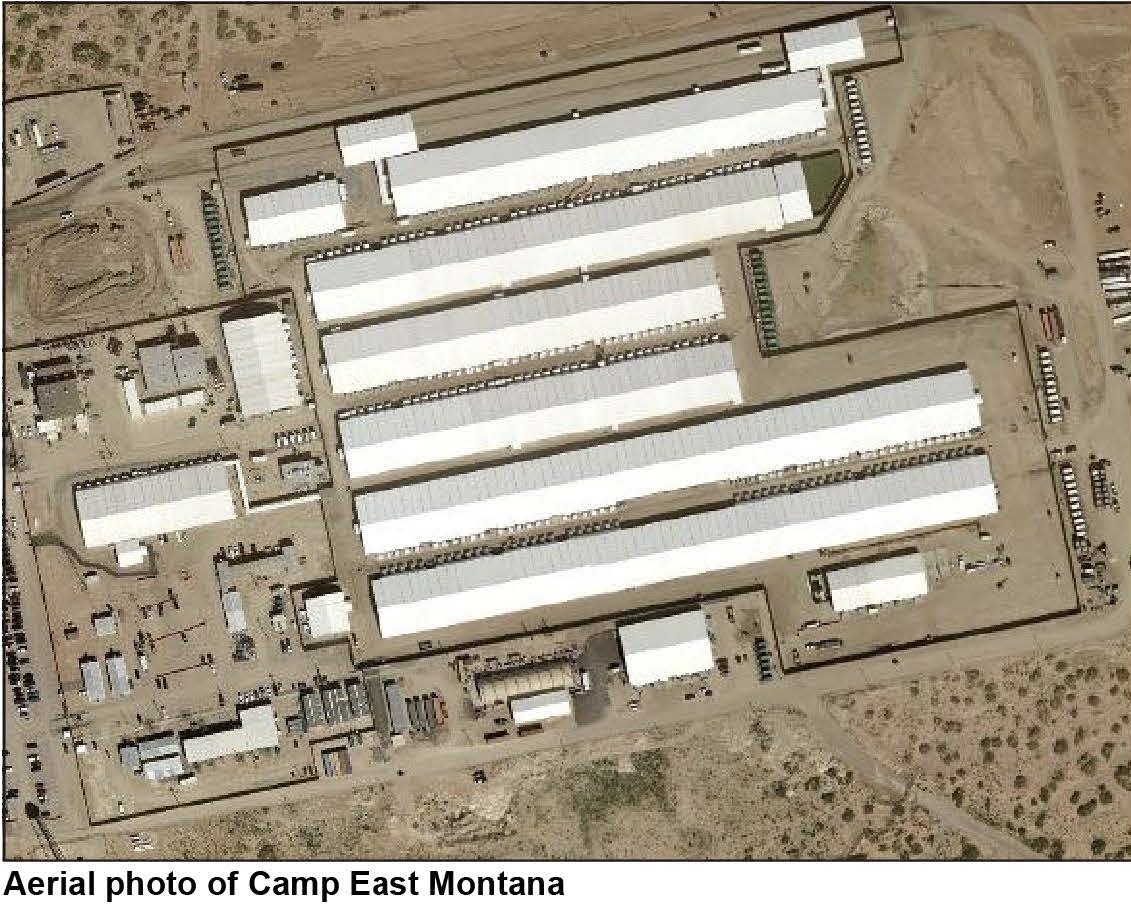
Camp East Montana is a large-scale immigration detention center built on a military base in El Paso, Texas, on the U.S.-Mexico border. Erected in August 2025, it is the largest immigration detention center in the United States, with a stated capacity of 5,000 people.
Doctors of the World joined the ACLU of Texas, Border Network for Human Rights, local and state officials, and other organizations in signing a joint statement calling for the facility’s permanent closure and a full independent investigation into the three deaths there.
We signed as a medical voice in that coalition—because for us, human rights and access to healthcare have never been separate.
What the record shows
A recent lawsuit brought forward by legal organizations, including the ACLU of Texas, ACLU, and the Texas Civil Rights Project, documents what people inside Camp East Montana have experienced—and the picture it paints is one of widespread, documented failures in basic healthcare.
A woman was told the facility could not provide her weekly insulin shot because it was too costly, and she went weeks without it. A man told guards repeatedly that he needed his tuberculosis medication and was told nothing could be done until he was processed. Another man was denied chemotherapy for his cancer and died shortly after his release.
The failures extend well beyond individual cases. By late February, 17 measles cases were confirmed in El Paso, 13 of them inside Camp East Montana, and the people held there received no masks, no vaccinations, and no information about what was spreading around them. Because the walls in the housing units do not reach the ceilings, there was no way for anyone inside to protect themselves from the air they were breathing.
None of this has gone unnoticed by the agency responsible for it. One month after the facility opened, ICE’s own inspection found at least 60 violations of federal detention standards, including failure to properly monitor and treat medical conditions. A second inspection months later turned up 49 more deficiencies—among them, failure to evaluate co-occurring HIV risk in patients. These are not outside critics. These are ICE’s own people, finding that ICE’s own facility is disregarding ICE’s own standards.
The record shows a facility that has consistently and repeatedly fallen short of even the most basic standards of care.
What we see in El Paso
Doctors of the World runs mobile clinics across El Paso—at migrant shelters, in community spaces, wherever we’re needed. When people are released from Camp East Montana, many of them come straight to those shelters, and what we see consistently is people who have gone days without their medications. Insulin, blood pressure medication, HIV treatment: simply gone. These are not minor gaps in care. Missing insulin for a day or two is nothing like missing a vitamin, and it can become life-threatening within hours.
Alongside our legal partners—the ACLU of Texas, the Texas Civil Rights Project, Las Americas, and Estrella del Paso—we also conduct medical evaluations inside detention facilities, carrying out mental health assessments and physical exams and documenting both what people have experienced and the care they never received.
Why we signed
We signed because we believe healthcare is a human right—and that right does not end at the detention center door. At Camp East Montana, that right is being systematically violated.
If you believe no one should be denied care because of where they are or where they are from, please consider supporting Doctors of the World’s work in El Paso and beyond.