

Doctors of the World joined three fellow humanitarian organizations in calling on the international community to act on the worsening crisis in Yemen. The following opinion piece was co-authored by Director General of Doctors of the World (France), Sandrine Simon, and published in Le Monde on July 25, 2026.
Adrift for years and plagued by foreign interference, Yemen is suffering one of the world’s most serious humanitarian crises. Representatives of Action Against Hunger France, CARE, Doctors of the World, and Mehad warn in this opinion piece that the international community must act—and quickly.
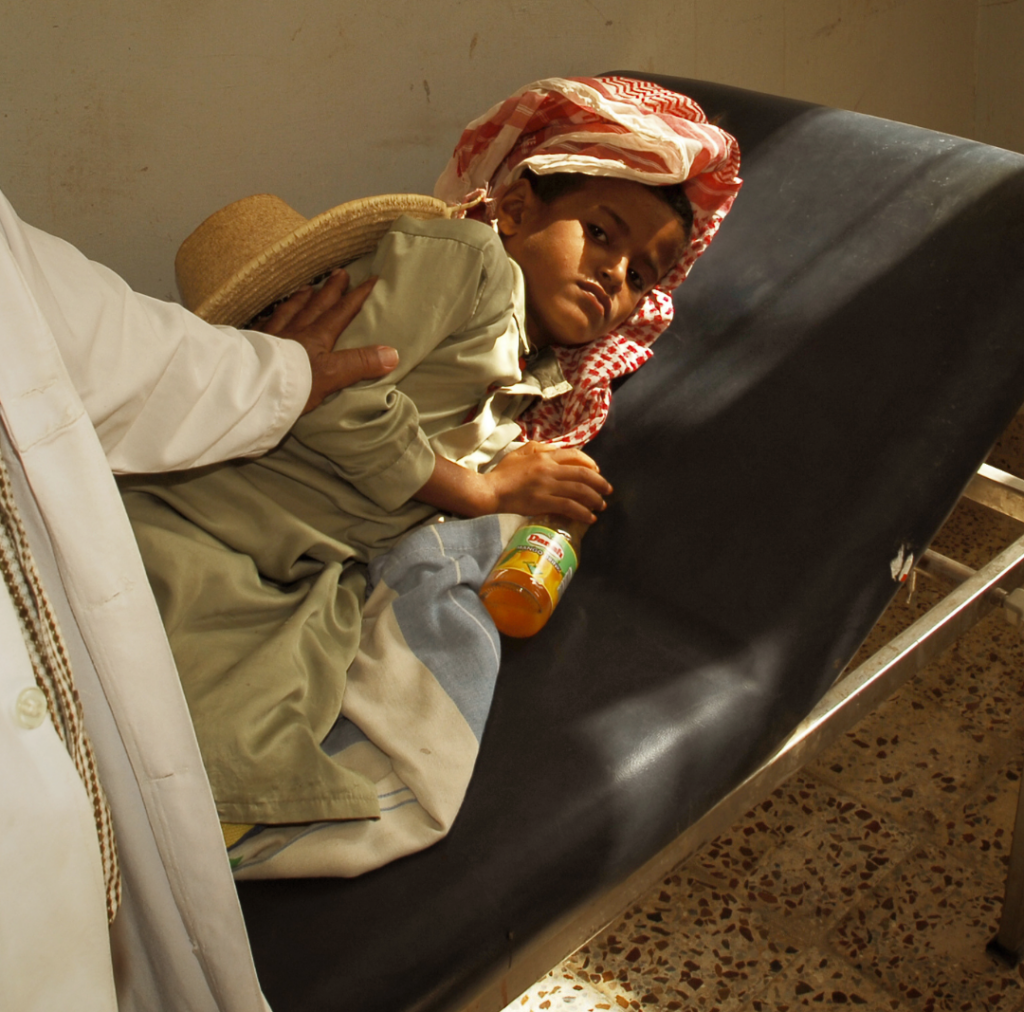
By 2026, 22 million people—nearly half the population—will need emergency assistance, according to the United Nations, and 18 million will be suffering from acute food insecurity. Among them, 2.2 million children under five will be malnourished, including 500,000 with severe malnutrition. These figures reflect extreme realities: children too weak to walk, families forced to choose between food and medical care, parents with nothing but tree leaves to feed their children, or traveling dozens of kilometers to find a health center still open.
The healthcare system is on its knees. Forty-one percent of facilities are non-functional or only partially operational. Drug shortages, staff shortages, and power outages deprive 19 million people of access to essential care. In this context, cholera, measles, diphtheria, and dengue fever spread rapidly, and every funding interruption means fewer vaccinations, fewer treatments, and weakened prevention.
Regional military escalation is further aggravating the situation: rising fuel and food prices are hitting a country heavily reliant on imports, making essential goods unaffordable for millions of families. NGOs are watching their costs increase while funding decreases.
Even more alarming, the 2025 humanitarian response plan was only 25% funded—one of the lowest levels in a decade—leading to facility closures, suspended nutrition programs, and a slowdown in prevention campaigns. More than 2,800 nutrition programs were suspended across the country in 2025 alone. Children are paying the price: malnutrition permanently compromises their physical and cognitive development.
The governorate of Abyan, in the southwest, is experiencing a particularly severe crisis, especially in the district of Lawdar. This region is home to a growing population, largely composed of displaced people, but access to healthcare remains extremely limited due to supply shortages. Therapeutic food for malnourished children is in short supply—a consequence of funding cuts and logistical disruptions. Between December 2025 and March 2026, pediatric consultations fell by 43.5%, and the number of children under five receiving care dropped by 39%. This decline is not a sign of improvement: families can no longer afford to reach a hospital, even as a third of the country’s mortality is linked to nutrition and maternal and child health.
Reinvesting in their health
In the north, restrictions and funding cuts have led several international NGOs to suspend operations entirely. The United Nations has suspended some of its own activities. Doctors of the World continues to maintain more than 15,000 consultations per month, nearly half of which serve displaced people. Access to healthcare is particularly difficult for women, due to social norms requiring them to be accompanied by a man—delaying or preventing treatment, including in cases of gender-based violence. The health centers we support experience multiple stockouts of essential medicines every month.
Prevention remains critical: the collapse of purchasing power, food insecurity, and limited dietary diversity undermine the effectiveness of medical treatments. Financial assistance programs would allow for a more comprehensive response.
Faced with this emergency, donors must massively reinvest in the humanitarian response—particularly in health. France must dedicate a meaningful portion of its humanitarian funding to Yemen and encourage its European partners to do the same. Supporting medical facilities, funding malnutrition treatment centers, guaranteeing access to essential medicines, and strengthening epidemic response are all vital to preventing an even more catastrophic collapse.
Yemen cannot become the forgotten crisis of the Middle East. Beyond the dwindling funding figures, millions of lives are at stake. The international community can still prevent a greater catastrophe—but every month of inaction brings the country closer to a breaking point with lasting consequences.
In Yemen, the emergency can wait no longer.
Perrine Benoist, Co-Director General of Action Against Hunger France; Emanuela Croce, Co-Director General of CARE; Alexandre Morel, Co-Director General of CARE; Sandrine Simon, Director General of Doctors of the World; Mego Terzian, Director General of Mehad.