
In the northern West Bank, access to healthcare is facing one of its worst crises in 20 years. And it’s largely going unreported.
Since October 7, 2023, military operations, settler violence, movement restrictions, and forced displacement have compounded an already fragile humanitarian situation—with direct, measurable consequences for people’s health. Patients are increasingly unable to reach medical facilities. Healthcare workers face mounting challenges in delivering consistent care. And an already strained health system is being pushed toward collapse.
A crisis the headlines are missing
While global attention has focused elsewhere, the scale of what’s unfolding in the West Bank is significant. Since October 2023, there have been 940 documented attacks on healthcare facilities—233 in 2025 alone. Forty-five percent of essential medicines are currently out of stock. More than 40,000 people have been forcibly displaced since January 2025. And 1,083 Palestinians have been killed in the West Bank since October 7, 2023.
The consequences extend beyond physical injury. Insecurity, violence, displacement, and repeated exposure to trauma are driving significant increases in anxiety, depression, and post-traumatic stress—in communities that already had almost no access to psychological support.
What care looks like on the ground
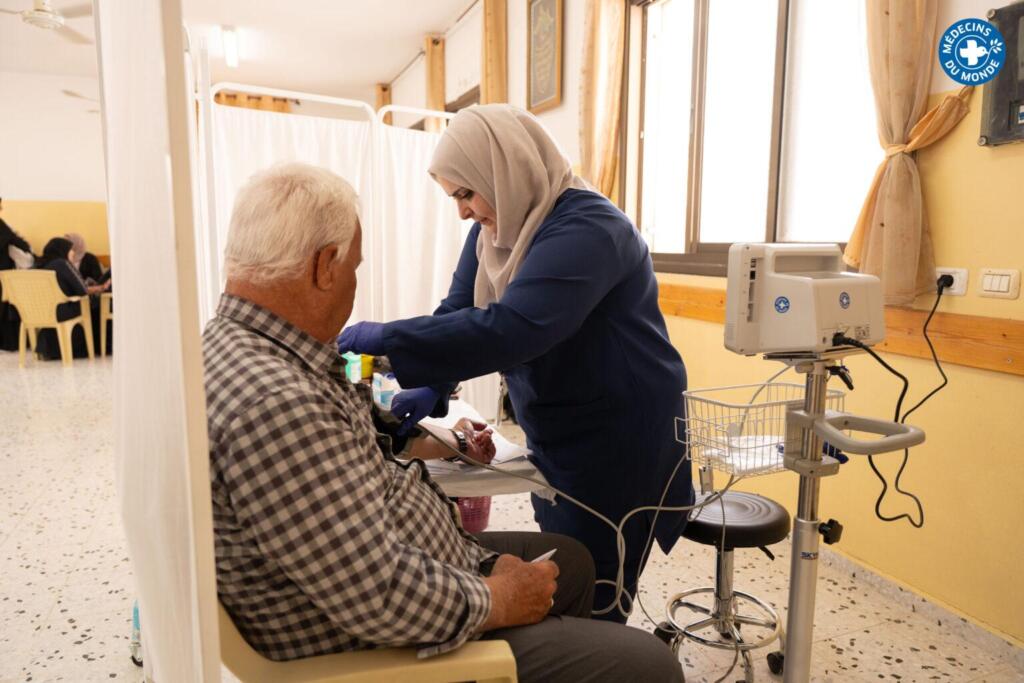
Since 2024, Doctors of the World has been operating a mobile health unit in the northern West Bank, bringing care directly to communities that can no longer safely or reliably reach a clinic.
The unit provides primary healthcare consultations, monitors chronic and acute conditions, renews prescriptions, and refers patients to specialized services when needed. Teams also deliver maternal and neonatal care, sexual and reproductive health services, and psychological support—including trauma-informed care and psychological first aid for people exposed to violence.
In 2025, the mobile unit provided 11,300 healthcare services across 14 communities in 4 governorates. For many of the people reached, this was the only consistent access to care available to them.
The barrier isn’t just geography
Patients aren’t unable to reach care simply because clinics are far away. They can’t reach care because getting there has become dangerous or impossible. Healthcare facilities have been attacked. Supply chains have been disrupted. Staff have been stretched beyond capacity.
This is what happens when healthcare becomes a target rather than a protected space. The right to health—enshrined in international law—is being systematically undermined.
What needs to happen
Doctors of the World calls on governments to take concrete action: end attacks on civilians and healthcare facilities, guarantee safe and unrestricted humanitarian access, protect Palestinian communities, and abandon any plans for annexation.
A mobile clinic can reach communities that have been cut off. It can renew a prescription, monitor a pregnancy, and offer psychological support to someone who has witnessed violence. But it cannot substitute for a functioning health system—or for the political will to protect one.
The right to health must be respected everywhere, and under all circumstances, including here, in a crisis the world has largely looked away from.