

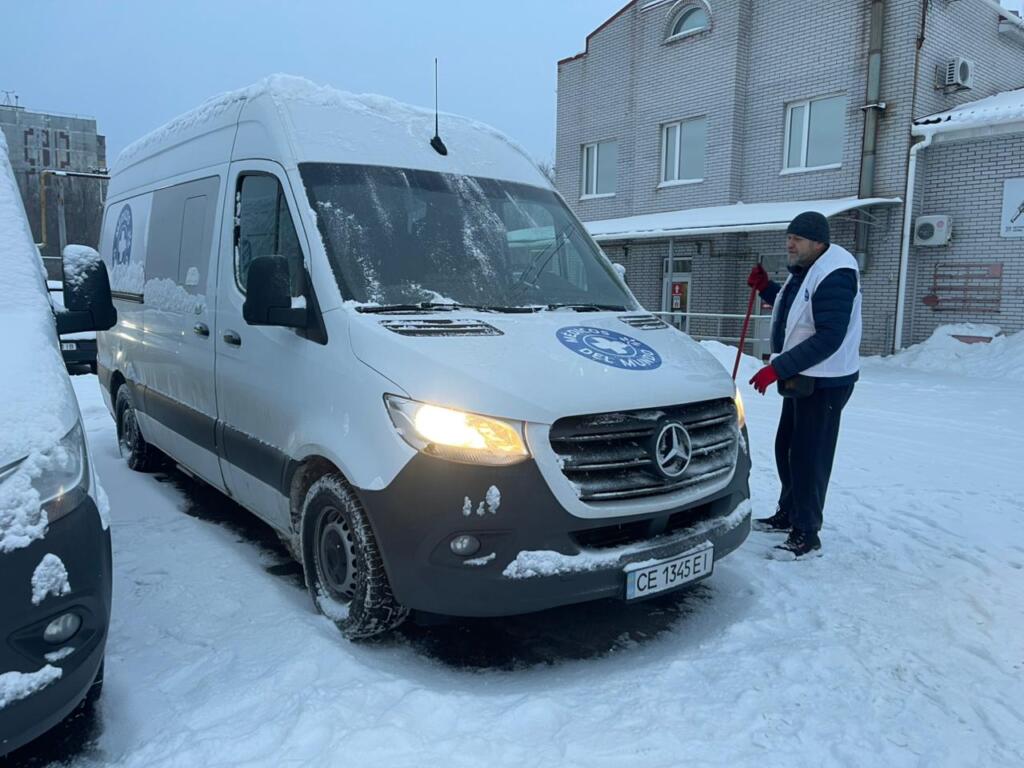
The ongoing attacks on energy infrastructure in Ukraine are having a direct and profound impact on the lives of millions of people. In the heart of winter, the lack of electricity and heating not only makes living conditions more difficult but also jeopardizes access to basic services, especially healthcare. Despite these enormous challenges, Doctors of the World teams continue to work alongside local healthcare workers to ensure access to healthcare after almost four years of war.
Sharp Increase in Attacks on Electrical Infrastructure in Ukraine
During this month, attacks against Ukraine’s electrical infrastructure have intensified significantly. Ballistic missiles, cruise missiles, and hundreds of drones have struck power plants and other vital structures in key regions such as Kyiv, Kharkiv, Dnipro, Odesa, and Zaporizhzhia.
These attacks caused massive power and heating outages, especially in large cities. In Kyiv, up to 70% of the city was left without electricity after one of the bombings, amid very low temperatures. The human impact is severe: at least four people died, dozens were injured, and thousands of homes were left without essential services.
Beyond the material damage, these attacks:
- They leave thousands of people without electricity or heating in the middle of winter
- They endanger the health and lives of the most vulnerable groups of people
- They hinder the population’s access to healthcare. Many healthcare facilities cannot operate without electricity.
How do Power Outages Affect the Daily Lives of the Population in Winter?
Many people go hours or days without electricity, making basic tasks like cooking, communicating, charging phones, or working difficult. Our colleagues in Ukraine are working through blackouts, internet outages, and heating failures.
This lack of heating is especially critical with temperatures ranging between -3°C and -10°C, sometimes accompanied by wind and high humidity. This has the greatest impact on the elderly, children, and those with health conditions, who are more vulnerable to extreme cold.
Direct Impact on Healthcare Facilities and Access to Health
Energy instability has serious consequences for the healthcare system. In many medical facilities, power outages disrupt:
- Heating and lighting
- The cold chain for vaccines and medicines
- Laboratory diagnoses and electronic medical records
Some centers are forced to reduce hours or postpone services, either due to a lack of stable electricity or because staff and patients must take shelter during bombings.
Doctors of the World has been working in the country since 2017 through mobile units to help mitigate these immense challenges. However, amid extreme cold and intensified attacks, operations are increasingly constrained by difficulties loading medical equipment, delays along routes due to roads damaged by ice and snow, and the necessity of working in severe conditions without independent heating.
For patients, especially the elderly, people with disabilities, or those with chronic illnesses, access to healthcare becomes even more difficult. The cold weather, transportation restrictions, and the fear of power outages during visits make many people hesitant to go to health centers.
Our Job: to Guarantee Healthcare Despite the Difficulties
Despite these extreme conditions, our teams continue working. During freezing temperatures, vehicles freeze, and access to communities is difficult. That’s why we make an extra effort to clear snow and ice and keep our vehicles operational so we can reach the people.
Thanks to the use of generators, heaters and support equipment, mobile medical teams continue to provide healthcare even in very difficult situations.
Success Story: Blahodatne Community, Kharkiv Region
For over a year, a mobile medical team served the community in a school without heating or a reliable electricity supply. In winter, consultations were conducted in freezing temperatures, using blankets, heating pads, and hot drinks for both patients and staff. Even so, between 25 and 30 people received care on each visit.
The team’s consistent presence and attentive service prompted local authorities to install an independent heating system in the consultation rooms. This improvement transformed working conditions and allowed for an increase in the number of people served, strengthening the sustainability of health services in the community.