
When the full‑scale invasion of Ukraine began in February 2022, it marked the start of one of the largest humanitarian crises in Europe in decades. More than four years later, the conflict continues to devastate communities — and healthcare workers remain among the most affected.
Hospitals, clinics, and ambulances have been repeatedly damaged or destroyed, despite international humanitarian law prohibiting attacks on medical facilities. According to international monitoring bodies, thousands of incidents affecting healthcare have been documented since the escalation of the war, including strikes on hospitals, primary care centers, and emergency services. These attacks leave entire regions without reliable access to care, forcing medical staff to work under constant threat.
Doctors of the World has been present in Ukraine since before the full‑scale invasion. When the conflict intensified, our teams pivoted rapidly to support those who could not flee — the doctors, nurses, and community health workers who chose to remain so their patients would not be left behind.
These are the healthcare keepers: women who continue to serve their communities under bombardment, occupation, and profound uncertainty. Their courage is quiet, steady, and essential.
Below are the stories of three of them
Irina: The Nurse Who Stayed So Others Could Heal
Irina has worked in the same rural clinic in the Inhul community for more than thirty years. She still remembers walking through its doors in 1994 — young, newly trained, and certain she had found her place.
“I like talking to people,” she says. “Helping them. When someone leaves feeling better — that’s enough for me.”
Before the war, the village held two thousand people. Then the occupation came. It lasted only two weeks, but for Irina, it felt endless. Explosions echoed from Kherson and Snihurivka. Soldiers went door to door. At one point, nine displaced people were living in her home, including teenage girls — her own daughter among them.
“We were afraid for them the most,” she says. “I still get goosebumps.”
After liberation, fear lingered. For two weeks, no one came to the clinic. Irina and one other nurse kept it running alone, with a doctor visiting only once a week. Slowly, people returned — first for urgent care, then for advice, then simply to talk.
The war reshaped their needs. Stress manifested as hypertension, diabetes, asthma. Younger patients arrived with chronic conditions. And beneath it all was a constant, heavy fear.
“At first, no one wanted to go to a psychologist,” she recalls. “They thought it was shameful.”
But word spread. Now people ask her directly: When will the psychologist come again? Irina understands why. After the occupation, her own sleep fractured. Her blood pressure rose. She was raising two children alone while her son underwent cancer treatment.
Then came the trainings from Doctors of the World. Psychologists worked with patients — and with staff.
“I need this too,” she realised. She learned simple breathing techniques. “I breathe in with the problem,” she says, “and when I breathe out, I let it go.” She teaches them to her children now. They laugh, but it helps.
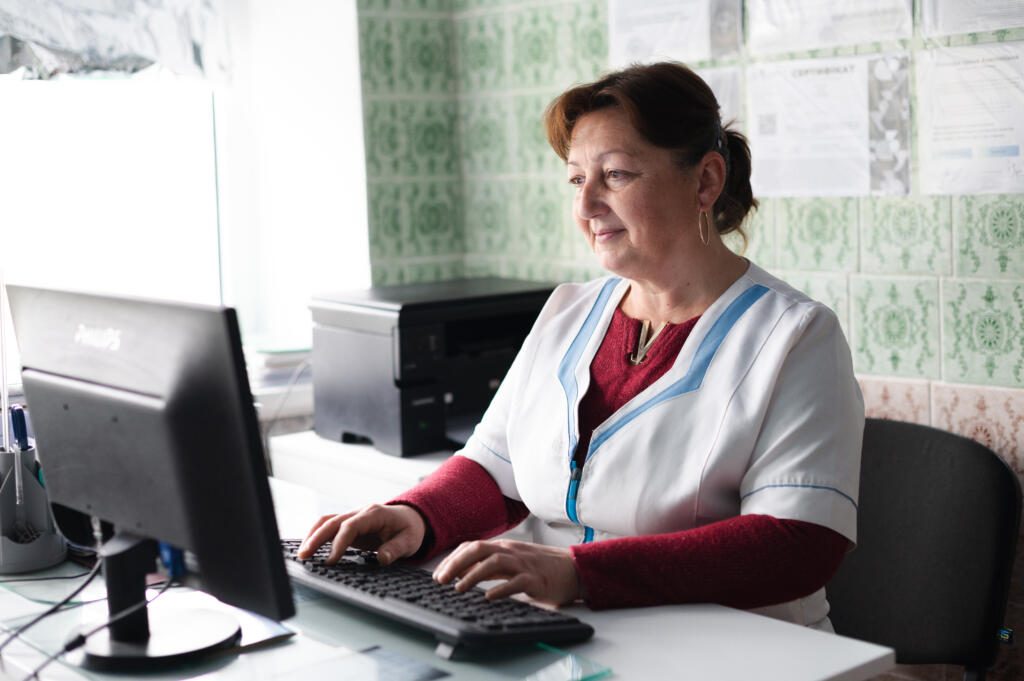
There are still only two nurses in the clinic. No permanent doctor. Twenty‑six bedridden patients rely on them. Humanitarian teams supported by international aid bring medicines, consultations, and psychological care. Irina never talks about leaving.
“We can’t,” she says. “People need us.” For her, it isn’t resilience or heroism. “This is my calling.” And every day, she stays.
Kateryna: Holding a Community Together
In the village of Tsentralne in the Mykolaiv region, Kateryna is the only nurse in the local hospital. There are no doctors on site — only telemedicine connecting patients to remote specialists. She handles everything from blood pressure checks to chronic disease management, from fevers to psychological distress.
“We work 24/7,” she says. “We do everything — Helsi, computers, and IV drips.” The emotional burden is immense.
“Right now, people’s psychological state is much worse than it was in 2023. Because it’s uncertainty. I’m about to cry myself, it’s hard for them, and it’s hard for me to go through this with them. I’m just a nurse, I’m not even a doctor and all of this stays inside me.”
She has learned to switch off her emotions to keep going — a habit formed early in her career. But the strain is constant.
“We live on, we keep living. We go to sleep not knowing whether we will wake up in the morning or not. When you provide help, you have to switch off your emotions. Helping loved ones is part of my job.”
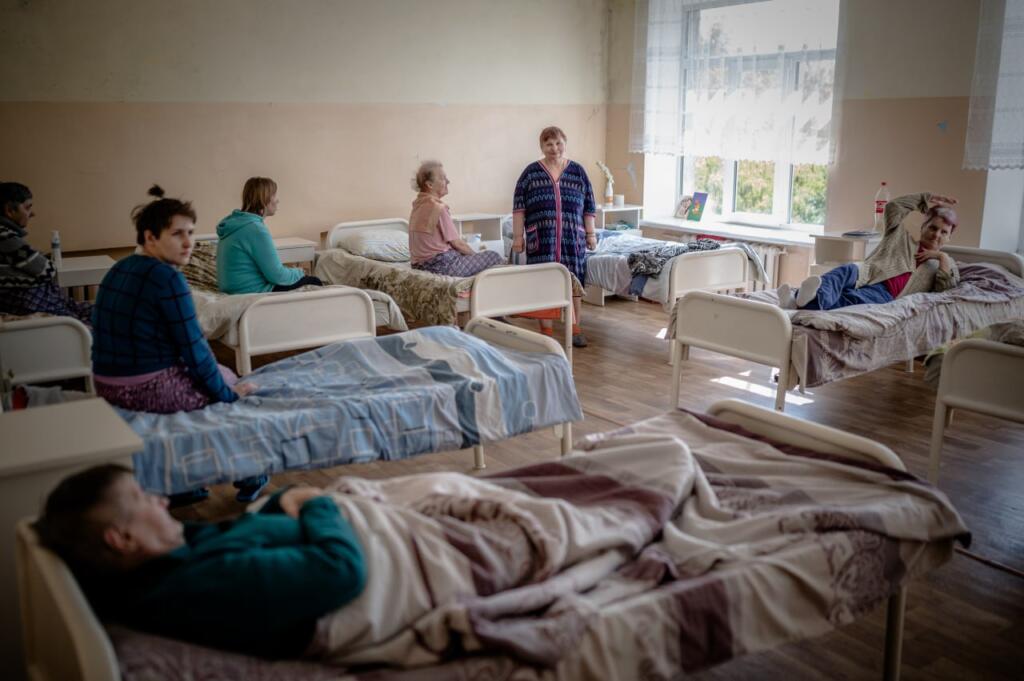
Doctors of the World and local partners have equipped her telemedicine room with essential medical and non‑medical equipment — desks, computers, printers, and the tools needed to keep care accessible in a region where movement is dangerous and specialists are far away.
Kateryna dreams of travelling, of drinking a cup of coffee calmly. For now, she keeps showing up — because for her, helping others is a moral choice.
Vita: Caring for the Displaced and the Elderly
In the Dnipro region, Vita serves as a medical director and family doctor in a community hosting large numbers of internally displaced people. Her team helps newcomers sign new declarations with local doctors and ensures that any donated medications or supplies are provided free of charge. Accessibility is a priority.
“We constantly collect information on how many elderly people we have, who is less mobile and who is more mobile,” she explains. The facility has ramps, wheelchairs, and transportation for home visits.
Training from Doctors of the World has strengthened their work.
“There were some very cool training sessions,” she says. “It was live communication and an exchange of experience. We gained new knowledge and improved upon what we already knew.”
One session focused on psychological burnout — a critical issue for healthcare workers under prolonged stress.
“Let’s just say, we understood what the options for self‑help are. When patients come for an appointment, you can share these life hacks and techniques with them and suggest that patients use them as well. Learning is always positive and great.”
Standing With Those Who Stand With Their Communities
Irina, Kateryna, and Vita are three among hundreds of healthcare workers who continue to serve in conflict‑affected regions of Ukraine. Their work is sustained by training, psychological support, and humanitarian aid — but above all, by their own unwavering commitment to the people around them.
They stay so others can heal.
And Doctors of the World stays with them.