

In Manila, Doctors of the World works with electronic waste dismantlers to raise awareness of the risks associated with exposure to heavy metals such as lead. The organization offers information and training sessions, distributes protective equipment, provides referrals to healthcare, and advocates for greater recognition of their work.
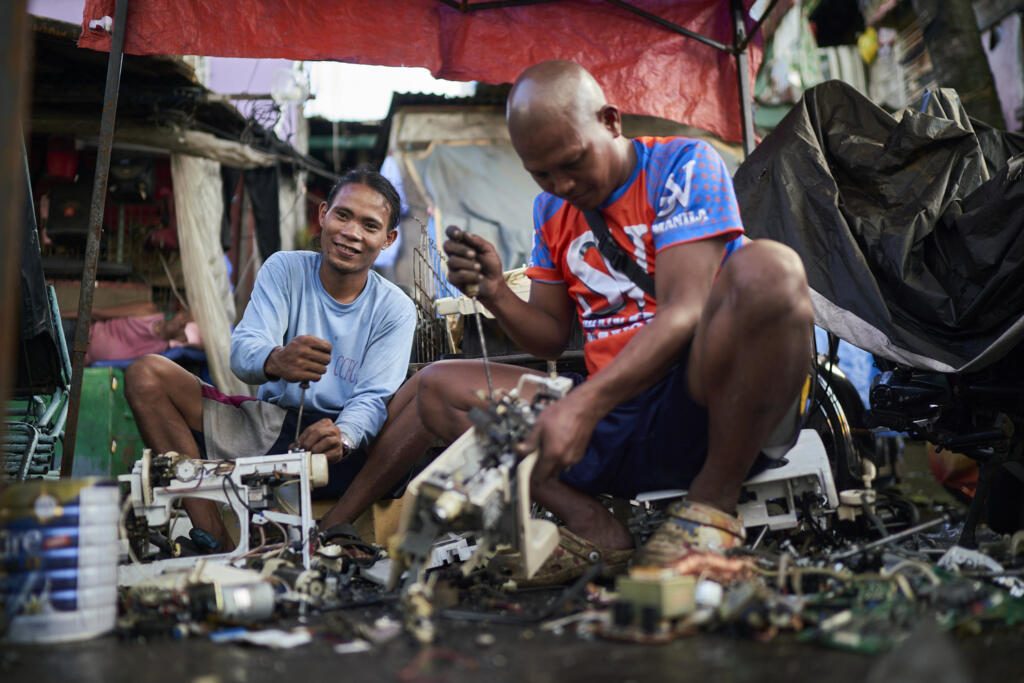
In Manila, Doctors of the World works in impoverished neighborhoods of the Philippine capital with electronic waste dismantlers. Built on a strong network of community partners, the project fosters trust and raises awareness among workers about the risks of their profession.
Alexander Amora’s hands move with feverish precision over a gray-streaked plate torn from the innards of an air conditioner. Blackened by a mixture of mud and soot, they patiently cut, twist, and extract copper filaments with the precision of a goldsmith. “ Air conditioners take longer and are more dangerous to dismantle, but we were lucky to salvage one today; they’re the most profitable because of the large amount of copper inside,” says the 51-year-old Manila resident. For the past ten years, he has bought televisions, cell phones, computers, and washing machines every morning, which he and his family then dismantle for the rest of the day to sell the most profitable components—metals like aluminum, copper, silver, and lead—to local wholesalers. “Every day is a challenge. Some weeks I earn nothing at all, but on the best days I can make up to 700 pesos [33 euros], which allows me to feed my family for more than a week.”
High-Risk Work
Thousands of people sort through tons of electronic waste every day, dumped by the city and the port, amidst the deafening traffic or in the tiny alleyways of the barangays (labyrinthine shantytowns that sprawl in the shadow of the glittering skyscrapers of wealthy neighborhoods). It’s an informal activity, but one tolerated by the Philippine government in the absence of an effective waste recycling system. Lacking formal workspaces, these dismantlers take down devices on the ground with their bare hands, risking cuts and other, less visible injuries such as cardiovascular problems and musculoskeletal disorders. “ These workers face a combination of injustices: in addition to suffering from outdoor pollution, unsanitary housing and floods that regularly hit their neighborhoods, they receive no official recognition despite the dangerous nature of their work and have no access to social services ,” explains Evelyn Pantoja, in charge of the Health and Environment program for Doctors of the World in Manila.
Active in the Philippines since 1996, the organization has progressively made the fight against environmental injustices a priority. For over ten years, the team has been working in several barangays (slums) in the capital to strengthen the capacity of waste pickers to protect themselves from the risks associated with their working conditions by offering awareness sessions and distributing protective gloves and masks. To go further, in 2024 Doctors of the World launched a new phase focused on the dangers of lead poisoning, a heavy metal found in electronic chips and circuits. “ In the long term, inhaling or ingesting lead particles leads to toxic effects on the nervous system, blood, heart, kidneys, and digestive system,” explains Rosana Milan, a doctor at the Pedro Gil Clinic, one of the organization’s four partner health centers in Manila. Lead poisoning is difficult to detect and particularly dangerous for the children of waste dismantlers, who may experience developmental delays in the brain and nervous system, along with learning and attention disorders .
The Strength of a Supportive Network
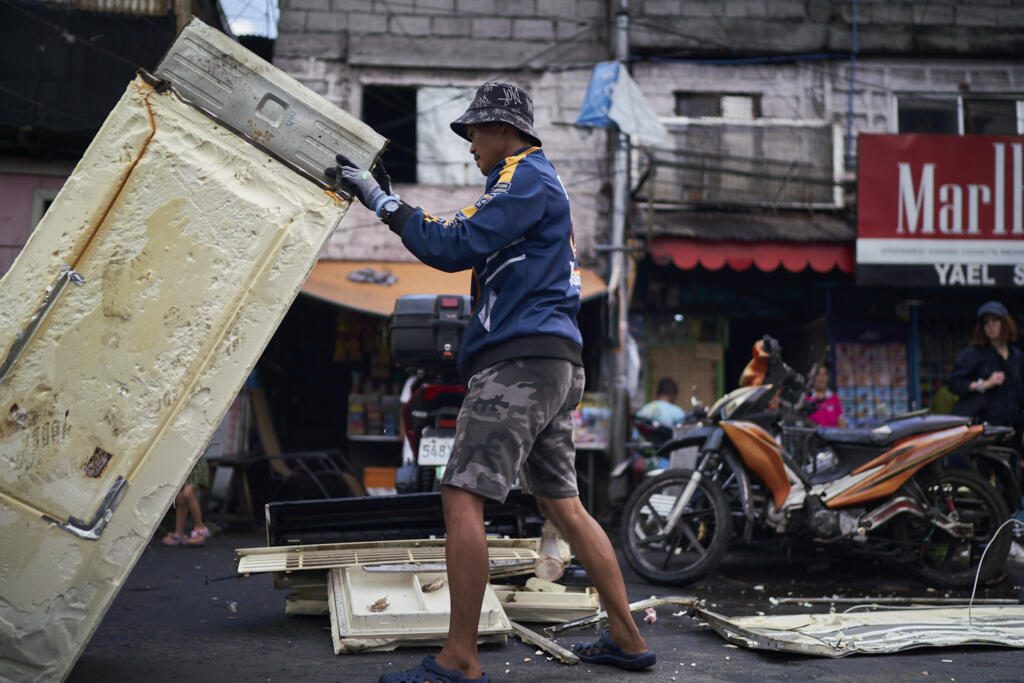
To disseminate information, Doctors of the World’s program relies on partner foundations and a large network of community volunteers, often neighbors of the electronic waste recyclers and from the same barangays (shantytowns). Around seventy volunteers take turns visiting the dismantlers each day of the week and directing them to the nearest health centers. Through these conversations, bonds are formed and sometimes inspire vocations, like that of Christina Sancon, who volunteered in her neighborhood to help her sick mother: “ Better understanding the health issues has given me the confidence to inform people and improve life in the barangay. It’s a process that takes time; most of the dismantlers don’t see their health as a priority.”
Little by little, work habits are changing. Alexander Amora has gotten into the habit of disinfecting the space where he stores and dismantles electronic devices and wears gloves more regularly, “even if the protective gear can slow things down, it’s important,” he admits. Every small solution, every idea suggested by the dismantlers to improve their working conditions is welcome. “ They are true partners,” explains Isabel Clarizze Diña, advocacy officer. “Together, we identify possible solutions to improve their health because we know that the communities know what’s best for them.” The team is advocating with public authorities for changes in local policies and easier access to lead poisoning screenings in health centers, treatments that are still too expensive for those most affected. Above all, they are fighting for greater recognition of the specific nature of this essential work in Manila, through the creation of dedicated workspaces, for example. Finding a voice and a place in the overcrowded city.