
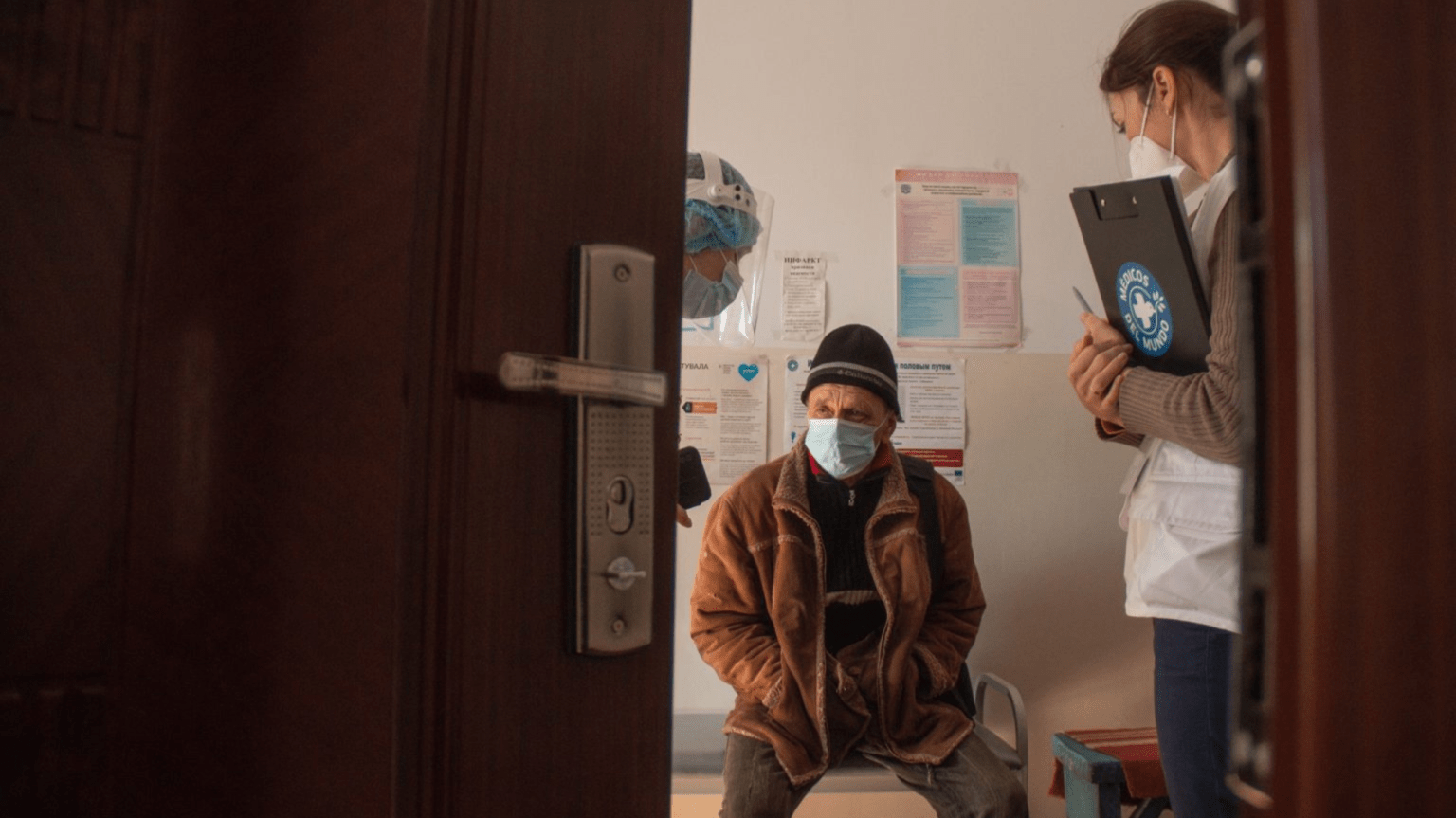
In Ukraine, even under bombardment, some people choose to stay. They stay to provide medical care just fifteen kilometers from the front line. They stay so that their neighbors can continue to reach a health center or hospital. Above all, they stay to offer a space where residents can speak about their suffering, seek psychological support, and protect their mental health after four years of war.
On the ground, Doctors of the World trains professionals in mental health care, enabling them to become a real support for the thousands of Ukrainians who face the fear of new attacks every day.
Discover below the testimonies of Larysa, a nurse, and Volodymyr Fesenko, head of the psychology department at the National University of Pharmacy.
Larysa, where do you work?
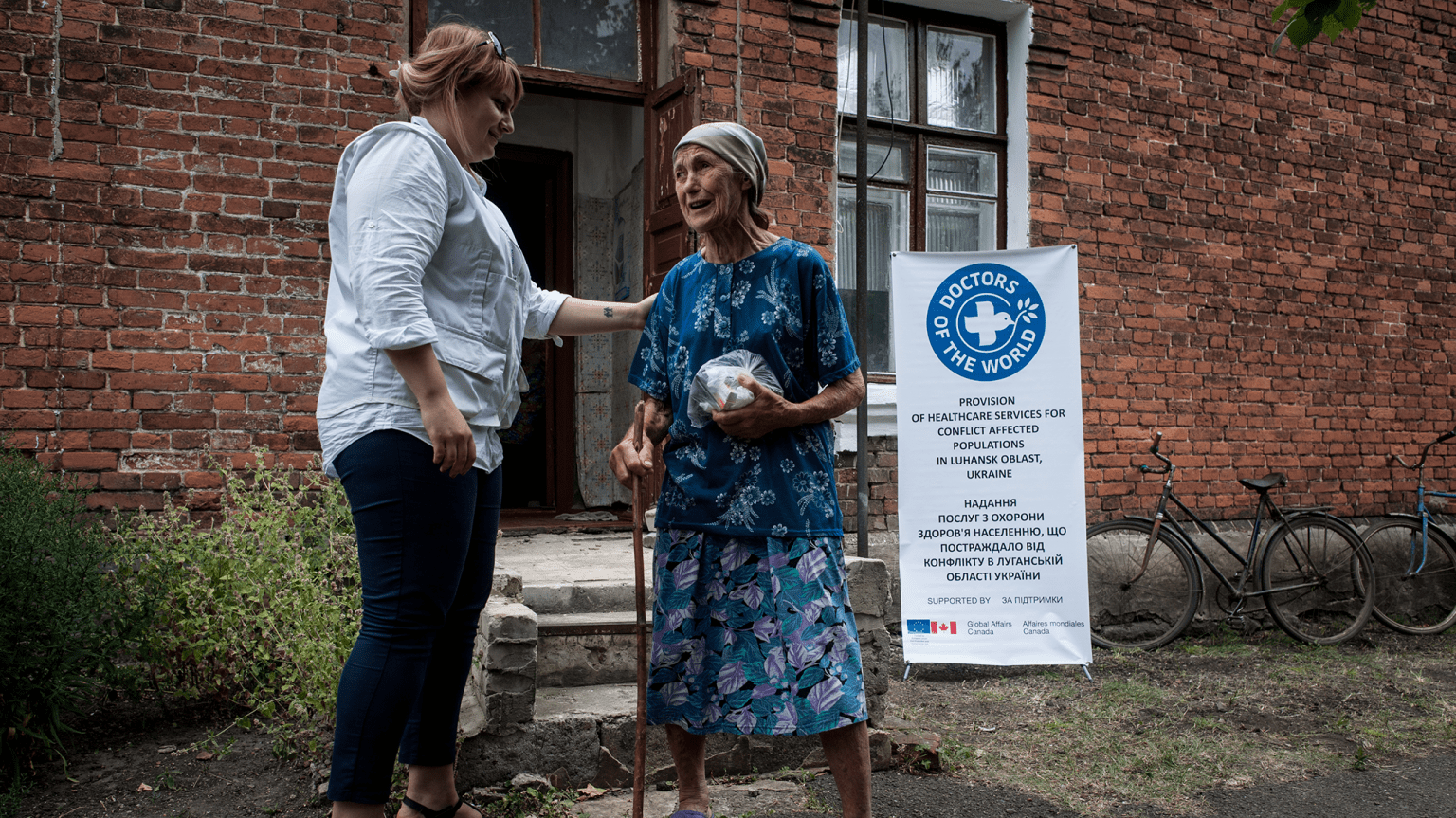
I am a nurse in the outpatient clinic in the village of Sheludkivka. Our village has approximately 3,000 inhabitants. Kharkiv is about sixty kilometers away, and the front line is only fifteen kilometers away.
Our team is small: a family doctor, two nurses, a driver, and a caregiver. Since the beginning of the war, none of us have left, neither the team members nor their families. Throughout all these years, we have stayed here: receiving patients, volunteering, and supporting one another
Even in the most difficult times, when the surrounding fields and forests were burning, we never stopped working.
How did you get started working on mental health?
The Doctors of the World team began coming to our village in 2024. At that time, our doctor went on maternity leave, and we found ourselves without a permanent physician. The Doctors of the World specialists provided consultations, delivered medication, and offered psychological support.
The residents eagerly awaited these visits: they could receive care, but also talk to someone who truly listened to them.
Subsequently, I was invited to participate in the training sessions for the mental health program. For me, it was a real eye-opener: clear, practical actions, applicable even in the most complex situations. This was exactly the kind of knowledge that primary healthcare had been lacking until then.
After this training, I felt much more confident in supporting people showing signs of mental disorders or severe stress.
How important is mental health to you?
For me, it’s a way to do our job better. We are the first link in the healthcare system and, very often, the first to notice that something is wrong with a person.
Thanks to this program, I now know how to talk to people in emotional distress. Even in times of war, mental health care cannot be postponed. On the contrary, it is more essential than ever.
Volodymyr, what is your experience and how did you become involved in mental health work?
I head the psychology department at the National University of Pharmacy. Two years ago, we were invited to a meeting in Kyiv to discuss integrating a mental health program into training curricula.
It was at that moment that I began to delve deeper into this subject. When the opportunity arose to personally participate in the mental health training offered by Doctors of the World, I immediately accepted.
How do healthcare professionals receive what they are taught during this training?
People arrive exhausted, worn down by the war, sleepless nights, and constant stress. But in one or two days of training, a change takes place.
What struck me most was seeing how ready healthcare professionals were left to question their own stereotypes.
As a professor, I consider this fundamental: if future healthcare professionals learn from the beginning of their training to talk about mental health without prejudice, the entire healthcare system will begin to evolve.
Photographs:
© Pietro Chekal – Médicos del Mundo
© Evgeniy Maloletka