
On most mornings, by the time Dr. Musa and his team arrive in a new community, people are already waiting.
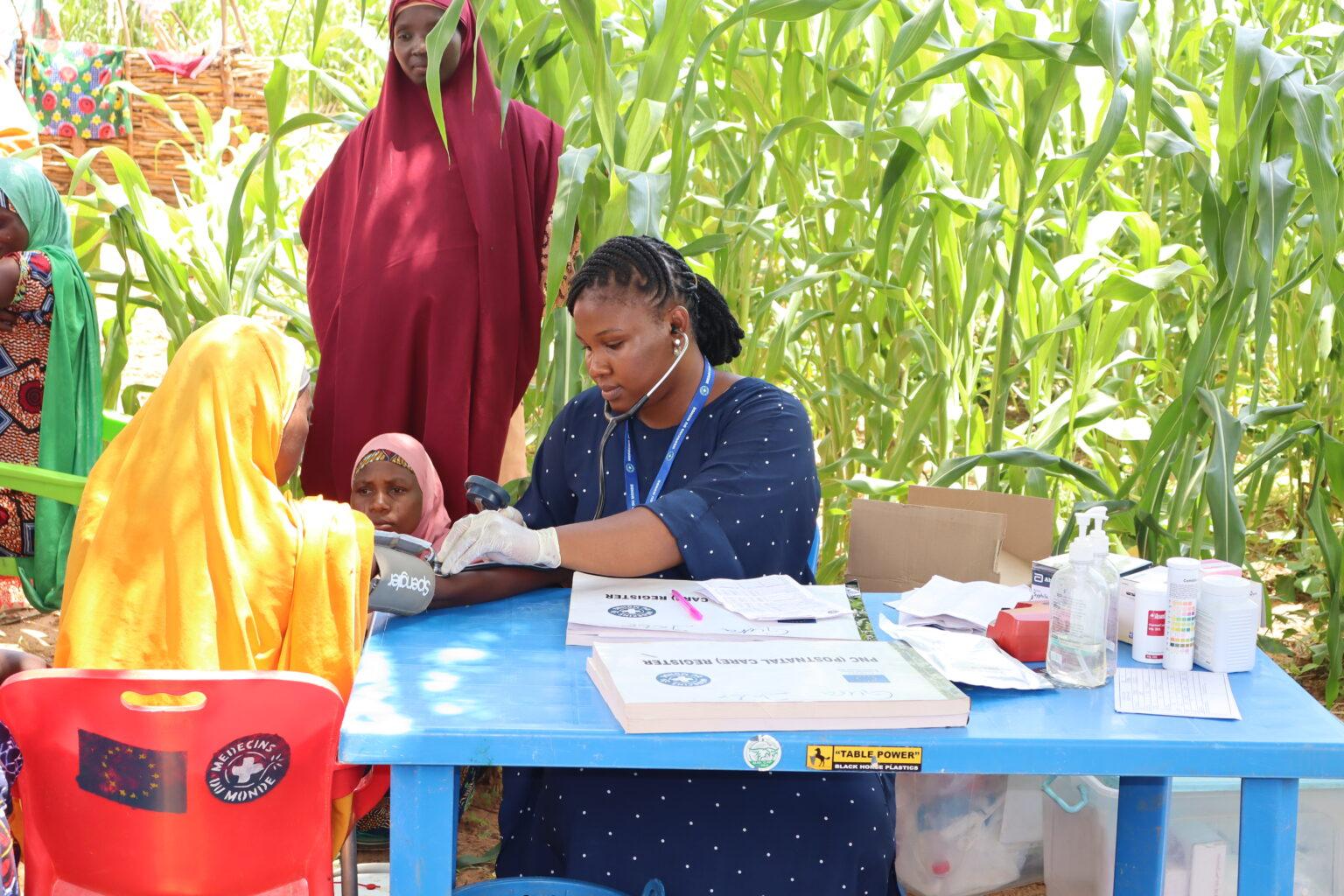
They come from the surrounding fields and compounds, some having heard about the clinic through a neighbor or a community elder, others simply drawn by the sight of the vehicle pulling in. The team sets up quickly—in a cleared space, under a tree, in the middle of a cornfield—and by the time the first patient sits down, the line behind them has already grown long.
Dr. Musa estimates that roughly 80 people receive care on a typical day. He joined Doctors of the World recently. Four days a week, he travels with the mobile clinic team across Zango Local Government Area in Katsina State, northwestern Nigeria, stopping in a different community each day to provide free healthcare to people who would otherwise go without.
One of the biggest challenges, he says, is the sheer number of people waiting when they arrive.
Beyond the Health System’s Reach
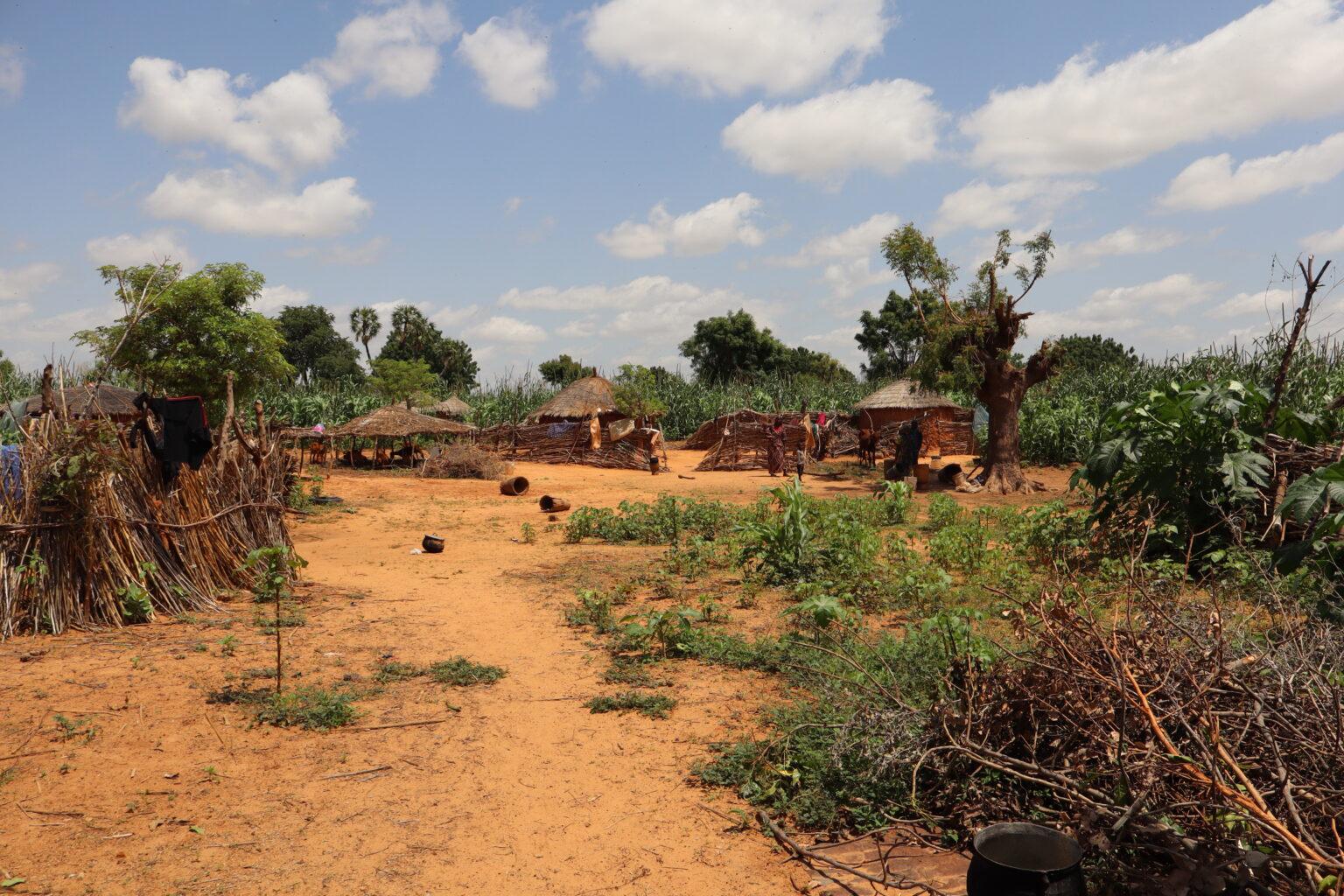
In Katsina State, isolated and nomadic communities must travel long distances to reach the nearest health facility. And, when they get there, services are often unavailable or unreliable. For many families, the calculation is simple and devastating: when you are sick and too weak to travel, you wait. You wait until you feel well enough to make the journey. By then, conditions that could have been treated early have become something harder to manage.
Mallam Issa* knows this calculation well. He is 56 years old and has lived his whole life in Jaholili—a community that bears his father’s name, surrounded by cornfields. The nearest health center is several miles away. Many of his neighbors, he says, don’t have the means or the energy to get there when they are sick.
Today, he needed care for stomach pain and headaches. Getting to a hospital would have taken him a full day. And, for most people in Jaholili, that journey is reason enough not to go. Instead, the clinic came to him, free of charge, a few steps from his front door.
He is grateful, he says.
The Clinic That Moves
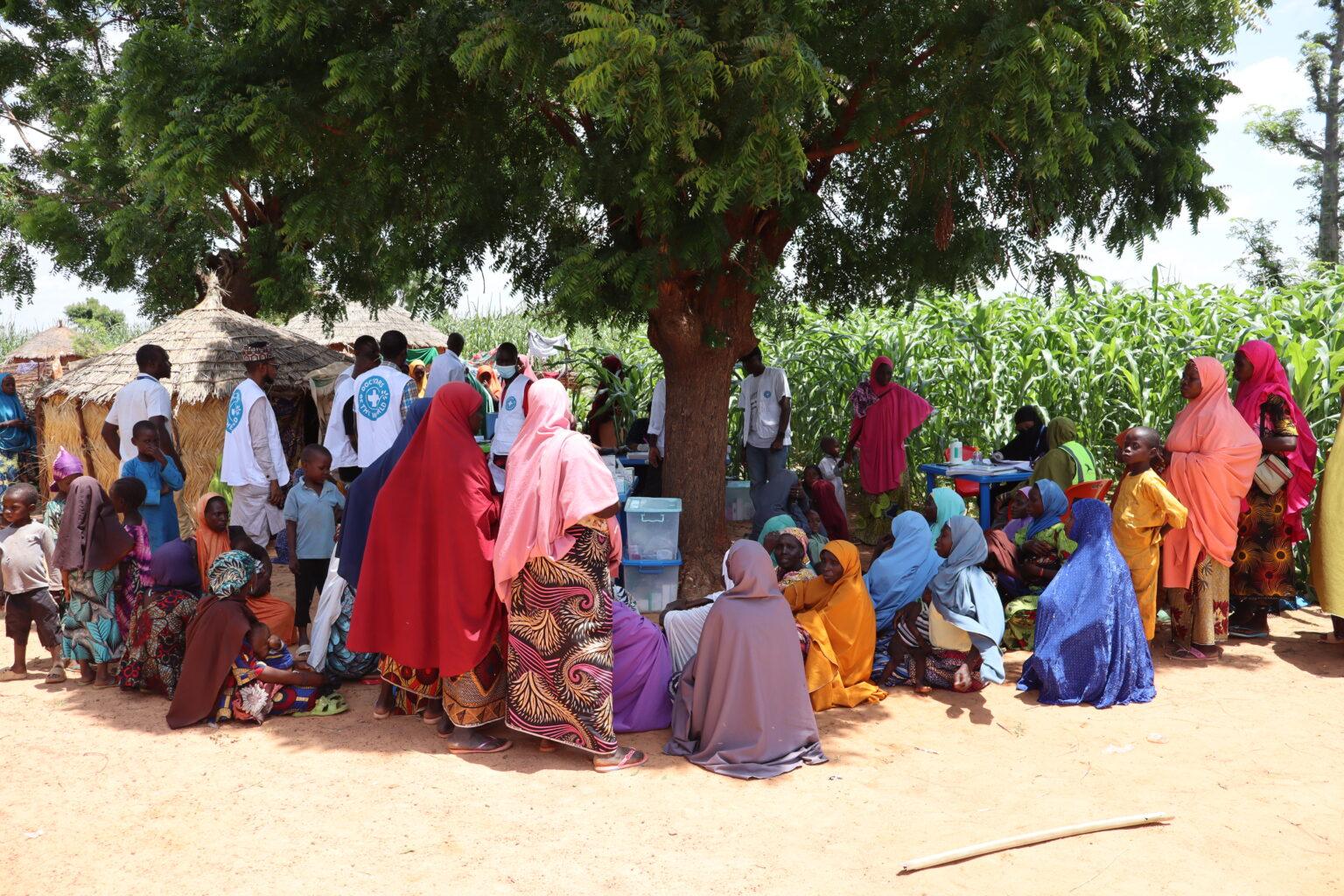
Doctors of the World’s mobile clinic in Katsina operates four to five months per year, concentrating its rounds during the rainy season and other periods when roads become impassable and communities that are already hard to reach become completely cut off. The team includes a doctor, a clinician, a nurse, a midwife, a pharmacist, and a mental health and psychosocial support counselor. Together they offer outpatient consultations, maternal and child health services, gender-based violence support, mental health care, emergency referrals, and health education—the kind of comprehensive care that most of these communities have never had consistent access to.
Vaccinations are offered at every stop. Ministry of Health officers join the mobile team on its rounds, immunizing children who might otherwise never receive them. The gaps are staggering: according to Nigeria’s most recent Demographic and Health Survey, only 15% of children aged 12 to 23 months in Katsina State are fully vaccinated. A third have received no vaccines at all.
The mobile clinic’s ambulance handles what the team cannot, transporting patients with urgent needs to fixed health facilities when the situation demands it. In communities where no one has a car and the nearest hospital is hours away, that ambulance can be the difference between a manageable emergency and something worse.
She Hadn’t Planned to Come
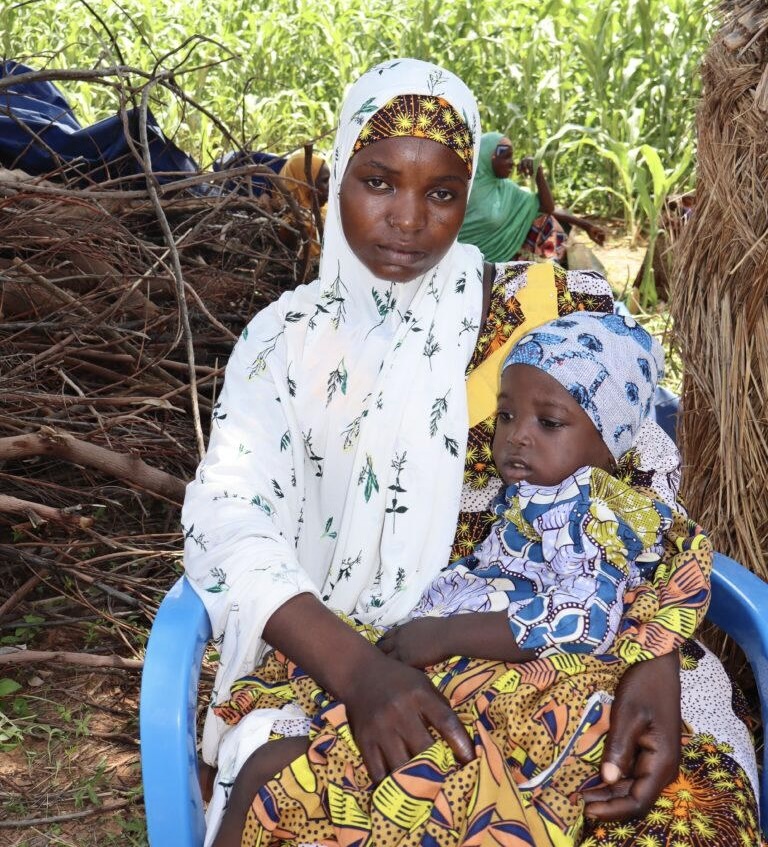
Ruwaida* heard about the mobile clinic from a friend who had attended a community health session where the upcoming visit had been announced. She traveled about an hour from Walawha with her three-year-old daughter Habiba, who had a fever.
Going to the hospital, she explains, is something she rarely does. The distance makes it difficult. When her children are sick—or when she is—and too weak to make the journey, she waits. She gave birth to both of her children at home, for the same reason.
Today, Habiba was examined by the team and received the medication she needed. Ruwaida watched.
“I was afraid for my daughter,” she said. “She wasn’t doing well. Now I am relieved.”
Tomorrow, Another Village
Doctors of the World supports seven health facilities across Borno and Katsina States in northern Nigeria, as well as the mobile clinic in Katsina. Together, these programs bring essential healthcare closer to thousands of people in some of the most isolated and underserved communities in the region.
The mobile clinic does not stay. It moves on to the next community the following morning, and the one after that, and the one after that. But for the people waiting in the cornfields of Zango—for Mallam Issa sitting in front of his door, for Ruwaida watching her daughter finally receive care—the fact that it came at all is not a small thing.
Your support helps keep care moving to the people who need it most, wherever they are. Support Doctors of the World.
*Names have been changed to protect the identities of those interviewed.