
When the Assad regime fell in December 2024, Saeed Jumaa began to feel a sense of hope. For the first time in years, it seemed like it was finally safe to go home.
“I thought maybe it was time to go back,” he says.
In early 2025, he made the long-awaited journey to his hometown in the eastern countryside of Maarat al-Numan—the village he had fled when the fighting reached it years ago. What he found stopped him cold.
“The houses were still in ruins,” he says. “There was no electricity, no clean water, no school, and not even a small clinic. It broke my heart.”
The hardest decision
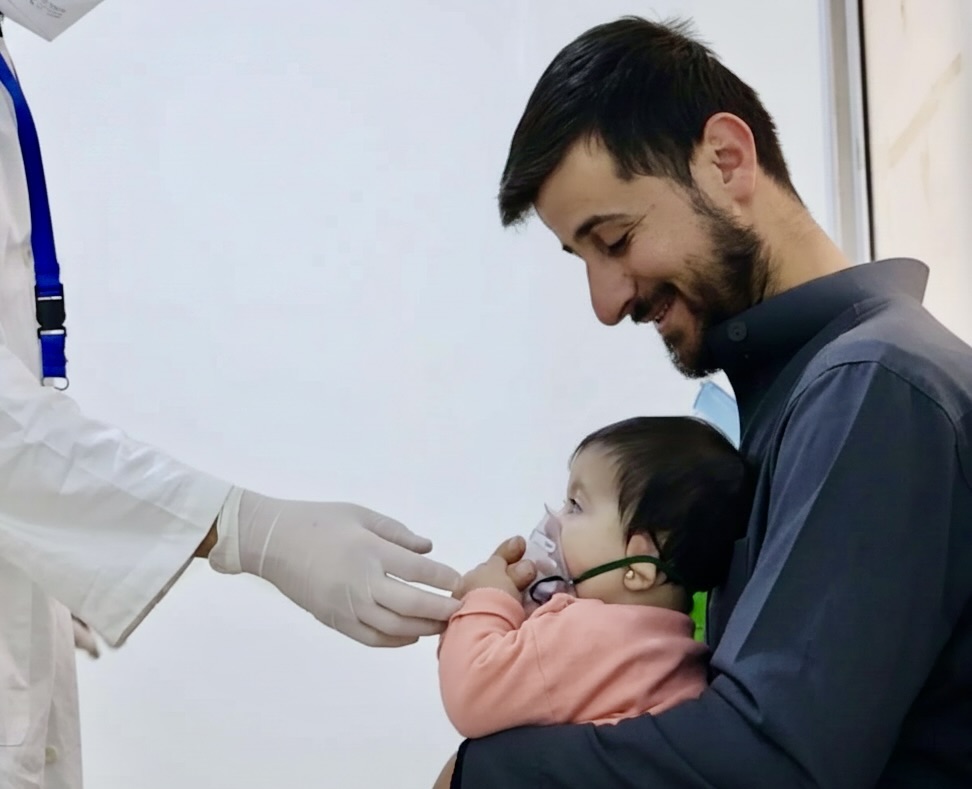
Going home was supposed to be the end of the story. Instead, Saeed was faced with a dilemma. His newborn daughter, Rayan, was suffering from breathing problems and kept getting recurring infections. But there was no clinic in his hometown.
“She needs regular checkups and medicine,” he explains. “In my village, even a simple fever can become life-threatening.”
So Saeed chose to stay in Kafr Takharim, a small town in Idlib where Doctors of the World had recently opened a clinic offering free consultations and medicine. For him, staying displaced was the only way to keep his daughter alive.
Saeed’s dilemma captures a larger truth across Syria and other protracted crises: helping displaced people is no longer only a matter of emergency relief, but of rebuilding the services and institutions that make return and recovery possible.
Return without recovery
The war in Syria may have ended, but the crisis has not. Across the country, millions of people are still trying to rebuild their lives, while others are returning to places that still cannot support them.
Years of conflict have forced more than 13 million Syrians from their homes. And more than 7.4 million people remain internally displaced inside the country, making it one of the largest IDP populations in the world.
In 2025, an estimated 1.3 million Syrians returned home from abroad—nearly three times the previous year—while 2 million Syrian IDPs went back to their places of origin. But as UNHCR itself reported this month, many returnees face serious challenges, including widespread destruction, weak economic conditions, and limited services. Like Saeed, many who have gone back to their hometowns have found nothing left to return to.
Syria is not alone. Globally, a record 14.7 million displaced people returned home in 2025—the second-highest number ever recorded. Yet 70 percent of the world’s refugees remain in displacement for years with little prospect of return or recovery.
Care within a broken system
For displaced families, a clinic is often the only place left to turn. Across Syria, Doctors of the World and its network partners maintain a continuous medical presence serving some of the country’s most isolated communities.
In Idlib and Aleppo alone, the program’s 13 clinics reached 72,878 people in a single year. Sixty percent were women and girls. And sixty-two percent, like Saeed, were displaced from their homes.
But the need runs deeper than what shows up in a basic medical exam. In a Doctors of the World survey of people in affected areas, two out of three reported that they experienced anxiety, depression, insomnia, or other emotional strain in the past three months.
© Guillem Trius
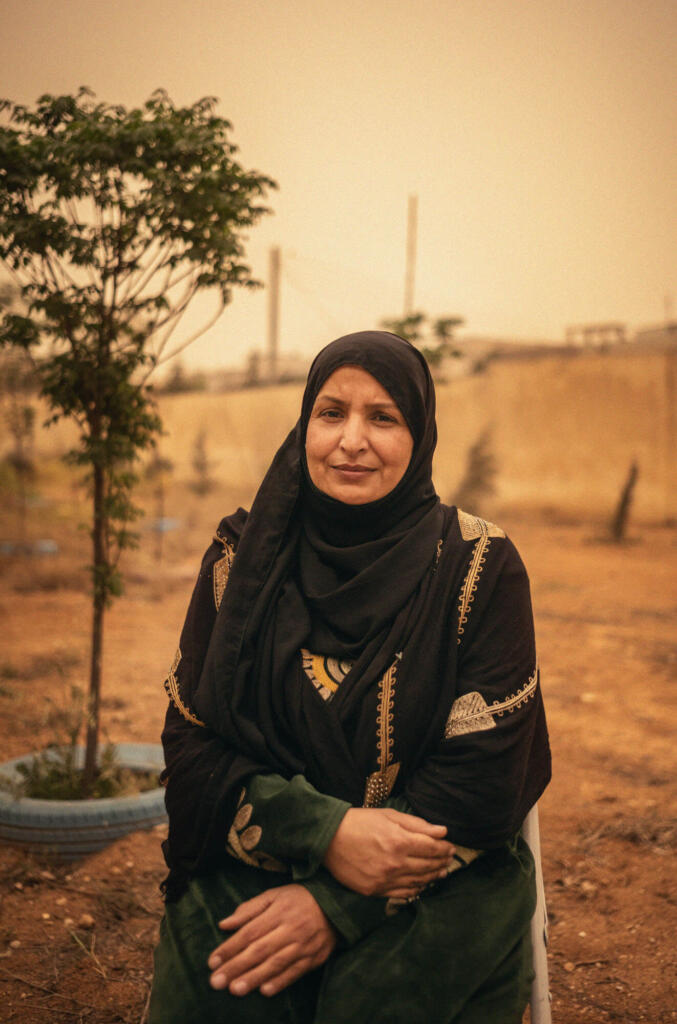
Samia Mohamed is one of them. Displaced twice during the war, she lost a relative to the fighting in 2016. The grief stayed with her for years. She found her way to a primary health center supported by Doctors of the World.
“We have all been affected by the war,” she says. “I was forced to move twice. It took a heavy toll on me.”
At the center, she began attending sessions with a psychologist and joined a self-help group. She found a job, and says that, more than anything else, that is what steadied her.
“I have to take care of myself,” she says. “Because if I’m irritated or angry, I pass it on to my family.”
But the support that helped Samia begin to heal depends on funding that is far from secure.
When the clinic goes dark
Early last year, many clinics across Syria had to shut their doors following a stop-work order on U.S. foreign assistance.
Doctors of the World was forced to suspend operations across all 10 of its directly operated clinics in Idlib and Aleppo. Operations were suspended for two months. When clinics were finally able to resume services, five of the original locations did not reopen. And, while alternative clinics were eventually established, communities that had relied on these clinics faced a serious gap in care.
In the town of Sarmada, Dr. Mohammad Fares, a Doctors of the World medical coordinator, unlocked the doors of a clinic that was once bustling. The medicine cabinets were now down to just a few boxes of bandages and some expired drugs. Before it shut down, the clinic had supported 16 IDP camps and roughly 35,000 people.
“If the support is not resumed, there will be a major disaster and serious harm to vulnerable groups,” Dr. Fares said.
Across much of Syria, there is no centralized government healthcare system, leaving many people reliant on non-profit providers like Doctors of the World. When these clinics close, care does not move elsewhere; it disappears entirely.
The impossible math of return
For Saeed, the Doctors of the World clinic in Kafr Takharim is a lifeline—the difference between a simple fever and a medical emergency. He would go home if he could. But home, for now, cannot take care of his daughter.
His dilemma is not unusual. For millions of displaced families around the world, the decision to return isn’t just about whether the fighting has stopped. It’s about whether there is a school for their children, clean water they can drink, a functioning clinic nearby. Without those things, going home is not a homecoming; it is a gamble most families cannot afford to take.
A clinic cannot rebuild a house or restore electricity. But, for Saeed, and for so many others still waiting to go home, it may be one of the most important things standing between where they are and where they need to be.