
On February 6, the International Day of Zero Tolerance for Female Genital Mutilation, this grave human rights abuse takes center stage worldwide. A Doctors of the World midwife in Ethiopia reflects on the impact on affected women.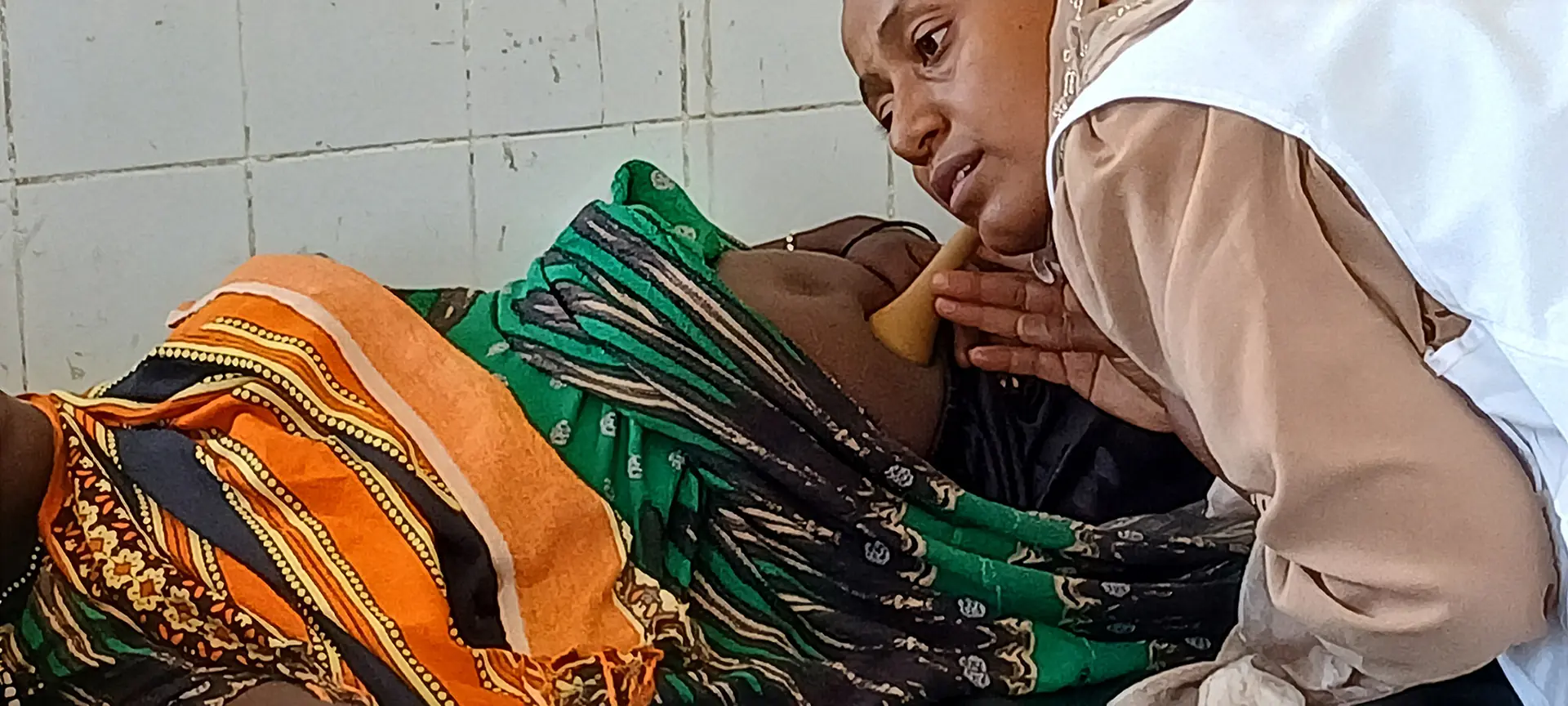 My name is Fatuma Ebad, and I work as a midwife for Doctors of the World in the Afar region of Ethiopia. I was born and raised here, so I know the language, the culture, and the challenges women face. Before joining Doctors of the World, I worked for two years at a government health center. When I heard that Doctors of the World focuses on the care of women and children, I knew immediately that this was where I belonged. This is also my passion.
At the health center where I work, we’ve seen amazing changes over the past year. Before Doctors of the World arrived, only about five mothers a month gave birth here. That number has risen to around 20 births a month. This progress didn’t happen overnight. We’ve worked hard with our community mobilizers and traditional birth attendants. Our goal is to raise awareness in local communities about the importance of giving birth in a health center. We also provide free medications and essential postpartum supplies, ensuring that expectant mothers have access to transportation to the health centres.
Before Doctors of the World started working here, many families didn’t know how they would get medication because most couldn’t afford it. Thanks to Doctors of the World, our warehouse is full of essential medications for mothers and children. This has saved lives.
The Drastic Consequences of Genital Mutilation
However, challenges remain. In Afar, female genital mutilation (FGM) is still widespread. Almost every girl is circumcised within three days of birth. If an affected woman later gives birth, her birth canal is often closed, leading to severe pain during delivery. We then have to perform a minor surgical procedure. This is very painful. Our culture does not allow women to scream during childbirth.
So they suffer in silence. Previously, we often saw one of the worst forms of FGM, Type 3; today, we primarily see the less severe forms, Type 1 and Type 2. The change is slow, but something is happening. Doctors of the World organizes events where community elders, religious leaders, and women’s groups inform the public about the dangers of FGM and the benefits of family planning.
Progress Gives Courage
Despite these challenges, I am grateful for the progress we have made. Mothers now know us and know they can trust us. They come regularly for prenatal care. There is hope. But we must continue working to change attitudes—especially when it comes to ending female genital mutilation and improving family planning.
I love my job because it helps mothers and children. This fills me with genuine satisfaction. I thank everyone who supports us! Together we can save lives and change attitudes.